
Yellow-eyed Babbler vs Rufous-headed Parrotbill
Chrysomma sinense versus Paradoxornis bakeri
Play a quiz with Yellow-eyed Babbler and Rufous-headed Parrotbill
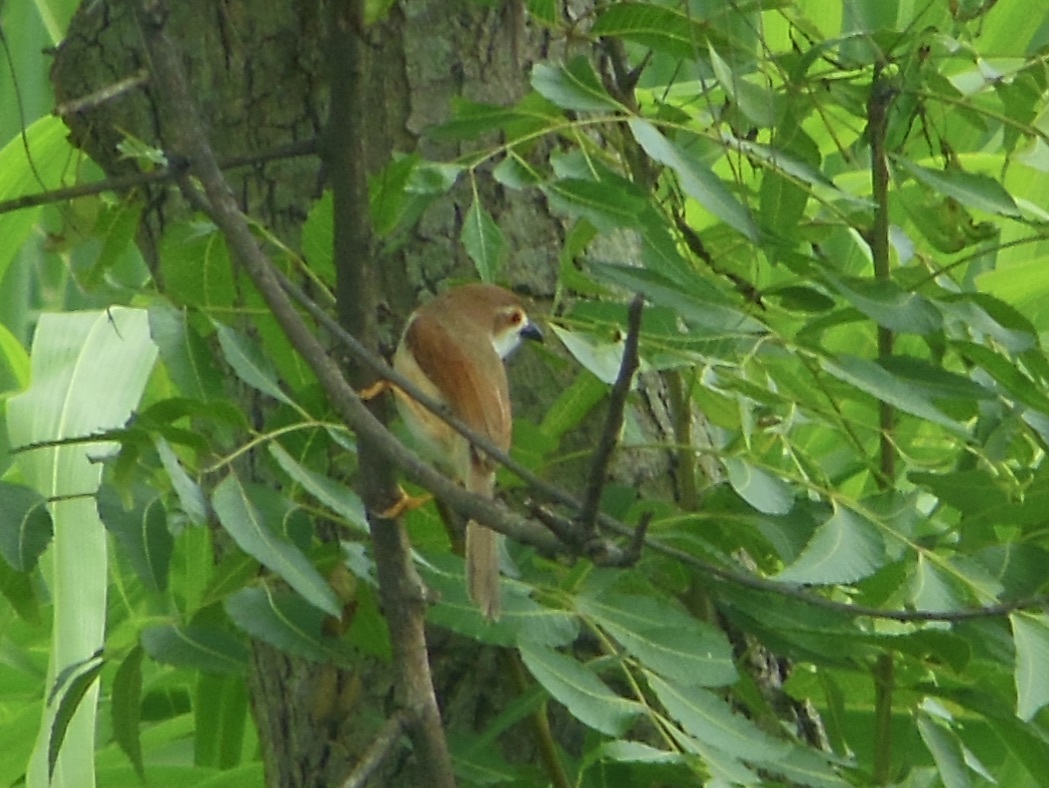 Yellow-eyed Babbler
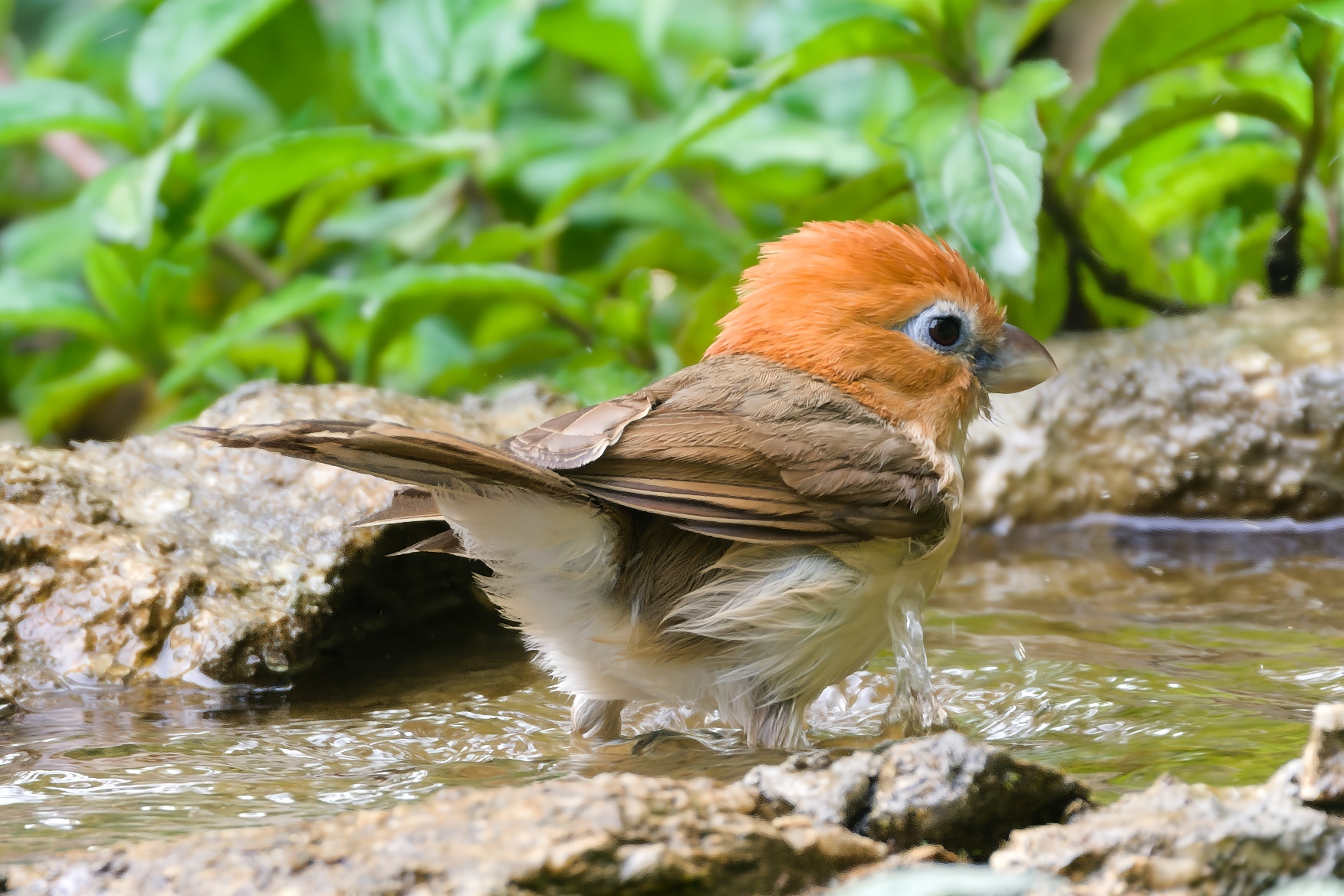 Rufous-headed Parrotbill
In short
The Yellow-eyed Babbler and Rufous-headed Parrotbill can be distinguished primarily by their head markings and eye color. The Yellow-eyed Babbler has a distinctive yellow eye and a white supercilium, while the Rufous-headed Parrotbill features a rufous head and lacks the bright yellow eye.
Identification tips
- Look for the yellow eye and white supercilium on the Yellow-eyed Babbler. 2. Note the rufous head on the Rufous-headed Parrotbill. 3. Observe habitat preference: open areas for the babbler, dense forests for the parrotbill. 4. Listen for the babbler's melodious whistles. 5. Consider flock behavior; both species are social but may differ in habitat choice.
Size
Both species are similar in size, typical of small passerines, but the Rufous-headed Parrotbill may appear slightly bulkier due to its parrotbill structure.
Plumage
The Yellow-eyed Babbler has a yellow eye and a white supercilium, contrasting with its brownish upperparts. The Rufous-headed Parrotbill has a rufous head and lacks the white supercilium, with more uniform coloration.
Behaviour
Both species are active and often found in flocks, but the Yellow-eyed Babbler may be seen more frequently in open areas compared to the Rufous-headed Parrotbill.
Habitat
The Yellow-eyed Babbler is often found in open grasslands and scrub, while the Rufous-headed Parrotbill prefers dense forests and bamboo thickets.
Voice
Vocalizations differ, with the Yellow-eyed Babbler having a series of melodious whistles, whereas the Rufous-headed Parrotbill's calls are less documented but generally consist of softer notes.
Yellow-eyed Babbler · Rufous-headed Parrotbill · My Tricky Birds