
Yellow-plumed Honeyeater vs Crescent Honeyeater
Ptilotula ornata versus Phylidonyris pyrrhopterus
Play a quiz with Yellow-plumed Honeyeater and Crescent Honeyeater
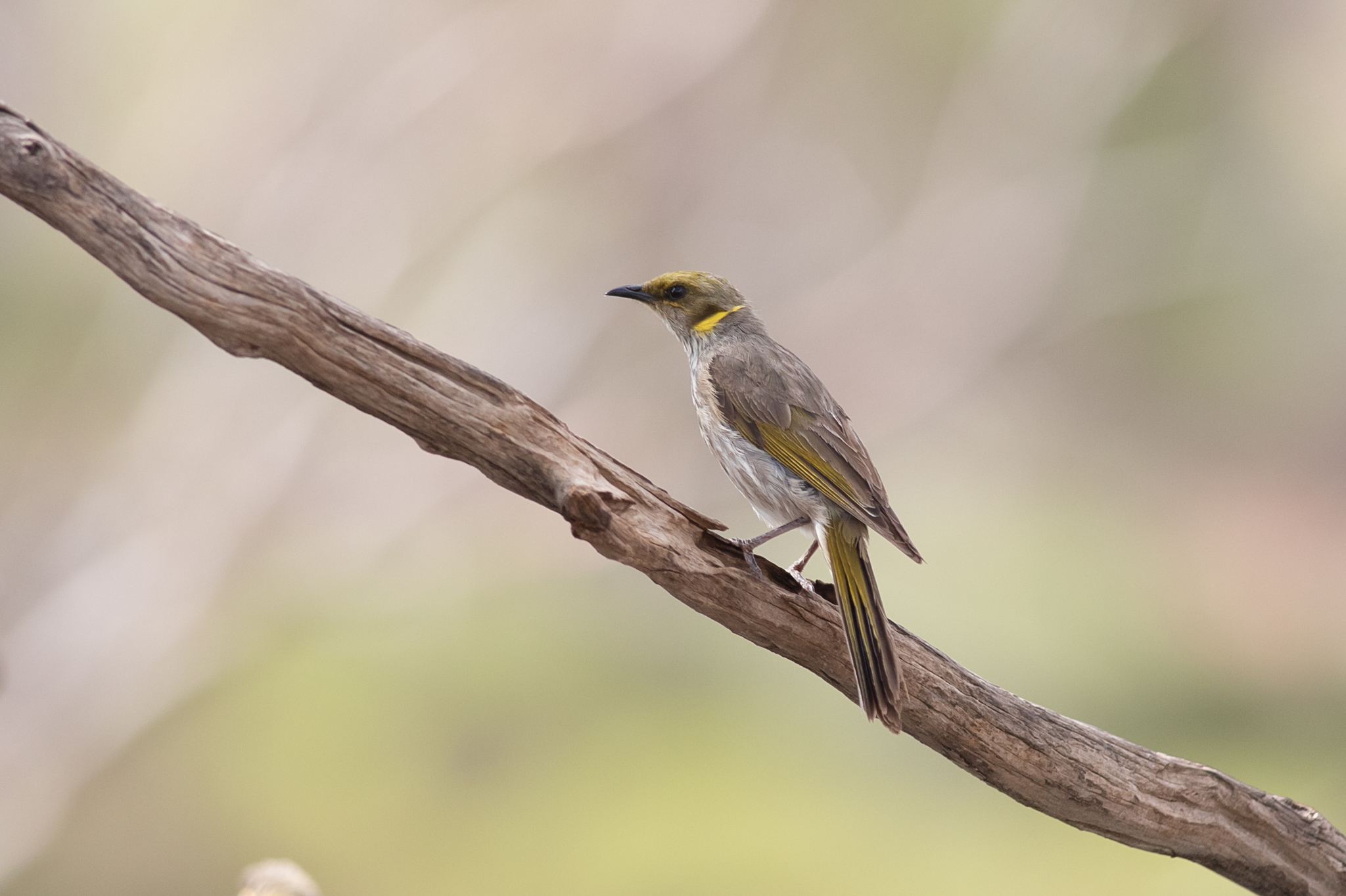 Yellow-plumed Honeyeater
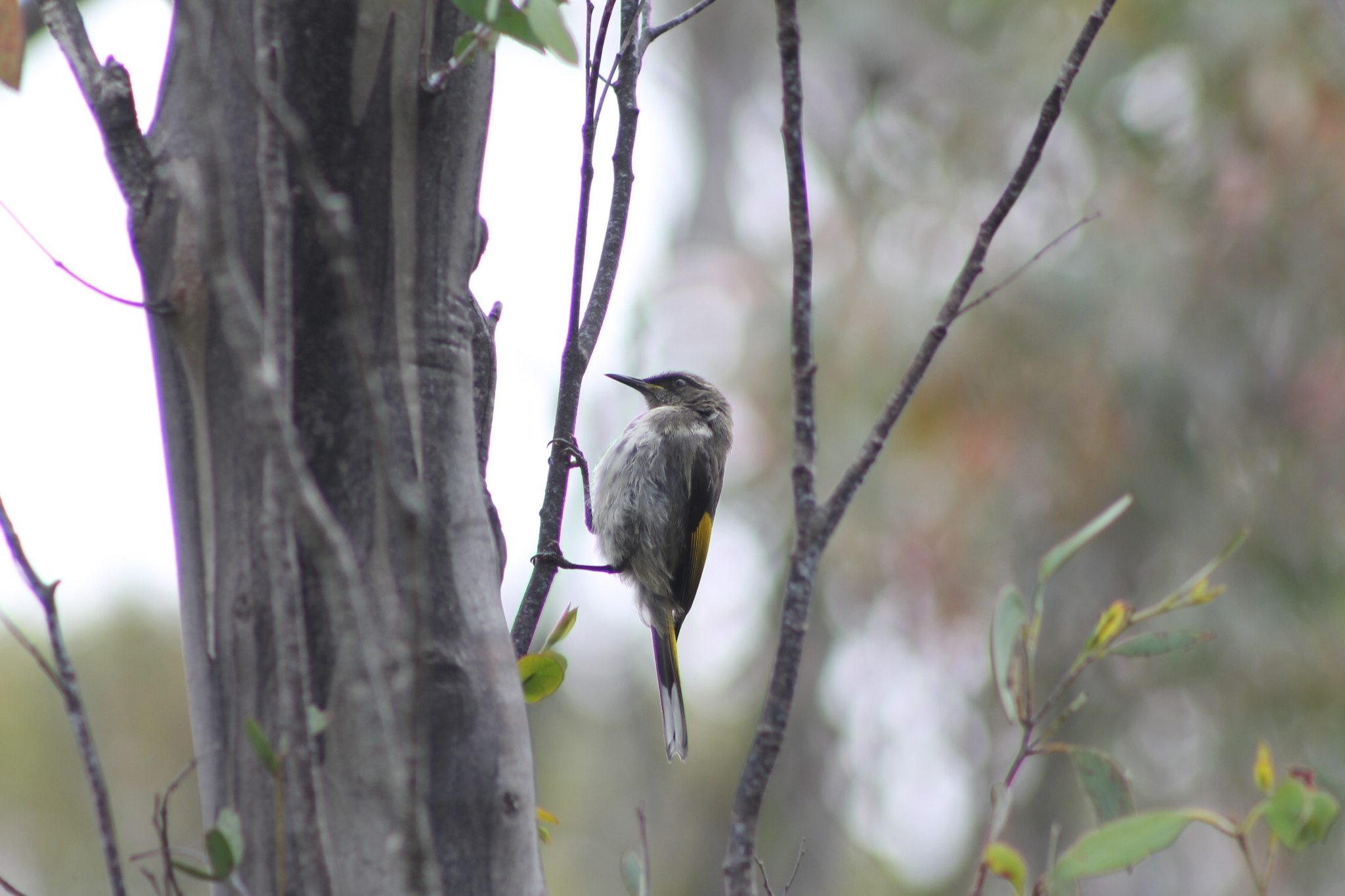 Crescent Honeyeater
In short
The Yellow-plumed Honeyeater and Crescent Honeyeater can be distinguished primarily by their plumage and habitat preferences. The Yellow-plumed Honeyeater is noted for its distinctive yellow ear tufts, while the Crescent Honeyeater features a prominent crescent-shaped marking on its chest. Both species are honeyeaters, but they occupy different habitats, which can aid in identification.
Identification tips
Look for the yellow ear tufts on the Yellow-plumed Honeyeater and the crescent marking on the Crescent Honeyeater's chest. Consider the habitat: drier woodlands for Yellow-plumed and wetter forests for Crescent. Use vocalizations as a secondary clue if familiar with their calls.
Size
Both species are similar in size, typical of small honeyeaters.
Plumage
The Yellow-plumed Honeyeater has yellow ear tufts and a generally olive-green body. In contrast, the Crescent Honeyeater displays a bold crescent-shaped marking on its chest and has a more greyish overall plumage.
Behaviour
Both species exhibit typical honeyeater behaviors, such as feeding on nectar and insects. However, specific behavioral differences are not well-documented.
Habitat
The Yellow-plumed Honeyeater is often found in drier, open woodlands, while the Crescent Honeyeater prefers wetter, forested areas. This habitat preference can be a useful clue in distinguishing them.
Voice
Vocalizations are not the most reliable distinguishing feature, but they may differ subtly in tone and pattern. The Crescent Honeyeater's song is often described as more melodic.
Yellow-plumed Honeyeater · Crescent Honeyeater · My Tricky Birds