
Indianerblässhuhn vs Zwergsultanshuhn
Fulica americana gegen Porphyrio martinica
Ein Quiz mit Indianerblässhuhn und Zwergsultanshuhn spielen
 Indianerblässhuhn
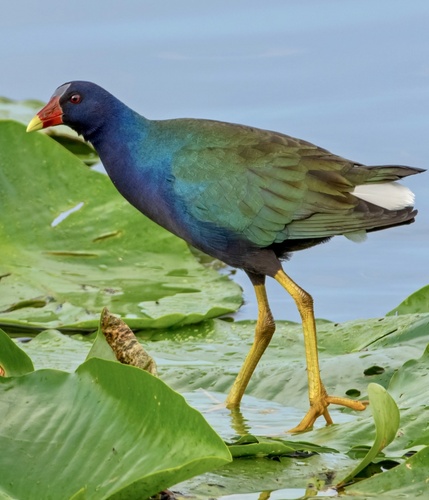 Zwergsultanshuhn
Kurz gesagt
Das Indianerblässhuhn ist ein plumpes, dunkelgraues Vogel mit einem markanten weißen Schnabel und Frontalschild, während das Zwergsultanshuhn lebhaft gefärbt ist mit tiefblauen, grünen und lila Gefieder, akzentuiert mit Rot, Gelb und Himmelblau. Das Blässhuhn ist aquatischer und in einer breiteren Palette von Feuchtgeb habitats zu finden, während das Sultanshuhn farbenfroher ist und oft in krautigen, Süßwasserumgebungen vorkommt.
Bestimmungstipps
Schnabel und Frontal Schild: Achten Sie auf den weißen Schnabel und das Frontal Schild des Indianerblässhuhns im Vergleich zu den bunten Akzenten des Zwergsultanshuhns. Gefieder: Beachten Sie die dunkelgraue und schwarze Färbung des Blässhuhns im Vergleich zu dem lebhaften Blau, Grün und Lila des Sultanshuhns. Lebensraum: Berücksichtigen Sie den Lebensraum; Blässhühner sind wahrscheinlicher in einer Vielzahl von Feuchtgebieten, während Sultanshühner krautige, Süßwasserumgebungen bevorzugen.
Gefieder
Das Indianerblässhuhn hat einen dunkelgrauen Körper mit einem schwarzen Kopf und Hals sowie einem weißen Schnabel und Frontal Schild. Im Gegensatz dazu ist das Zwergsultanshuhn reich gefärbt mit tiefblauen, grünen und lila Gefieder und hat rote, gelbe und himmelblaue Akzente.
Verhalten
Das Indianerblässhuhn ist ein versierter Schwimmer und Taucher, der oft große Flöße auf offenem Wasser bildet, während das Zwergsultanshuhn für seine Anpassungsfähigkeit an Lebensraumveränderungen und kooperatives Brutverhalten bekannt ist.
Lebensraum
Das Indianerblässhuhn ist in einer breiten Palette von Feuchtgebieten zu finden, einschließlich Süßwasserseen, Teichen, Sümpfen und küstlichen marinen Lebensräumen. Das Zwergsultanshuhn gedeiht in krautigen, Süßwasserumgebungen wie Reisfeldern und von Menschen geschaffenen Rückhaltebecken.
Stimme
Das Indianerblässhuhn ist bekannt für sein lautes Gackern, Grunzen und Quaken, während spezifische Lautäußerungsdetails für das Zwergsultanshuhn nicht bereitgestellt werden.
Indianerblässhuhn · Zwergsultanshuhn · Meine schwierigen Vögel