
Atila Polimorfo vs Soterillo Picudo
Attila spadiceus frente a Ramphocaenus melanurus
Juega un quiz con Atila Polimorfo y Soterillo Picudo
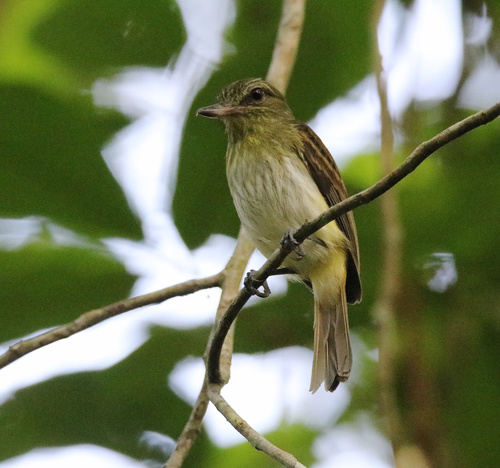 Atila Polimorfo
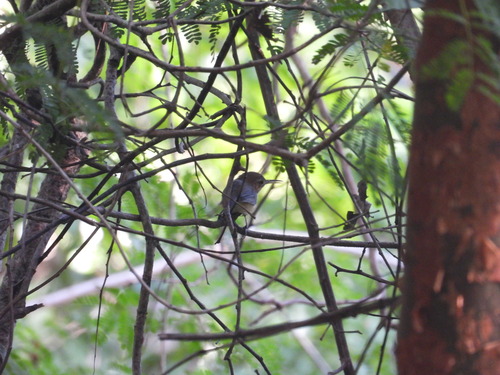 Soterillo Picudo
En breve
El Atila Polimorfo y el Soterillo Picudo son distintos tanto en estructura como en comportamiento. El Atila es un ave más grande con una constitución robusta, mientras que el Soterillo es más pequeño y esbelto con un pico notablemente largo. El plumaje del Atila varía mucho, pero generalmente tiene una rabadilla brillante, mientras que el Soterillo es más uniforme con sutiles variaciones en las partes inferiores.
Consejos de identificación
1. Tamaño y Estructura: Busca la constitución robusta y más grande del Atila Polimorfo en comparación con el Soterillo Picudo, que es más pequeño y esbelto con un pico largo. 2. Plumaje: Nota la rabadilla brillante y las posibles morfologías oliva-verde o rufo del Atila. 3. Comportamiento: Observa la tendencia del Soterillo a permanecer oculto en la densa vegetación. 4. Vocalización: Escucha la canción trémula y vibrante del Soterillo.
Tamaño
El Atila Polimorfo es más grande y robusto en comparación con el más pequeño y esbelto Soterillo Picudo.
Plumaje
El Atila Polimorfo muestra una variación significativa en el plumaje, incluyendo morfologías oliva-verde o rufo, y una rabadilla brillante. El Soterillo Picudo tiene un plumaje más uniforme con algunas poblaciones que muestran gargantas con manchas oscuras y partes inferiores más cálidas.
Comportamiento
El Atila Polimorfo se ve más a menudo en espacios abiertos en comparación con el Soterillo Picudo, que tiende a permanecer oculto dentro de la densa vegetación.
Hábitat
El Atila Polimorfo habita una amplia gama de tipos de bosque, pero evita áreas muy perturbadas, mientras que el Soterillo Picudo se encuentra a menudo en enredos densos de vegetación.
Voz
El Soterillo Picudo se localiza mejor por su canción trémula y vibrante, que contrasta con las variadas canciones del amanecer del Atila Polimorfo.