
capitão-de-saíra-amarelo vs chirito
Attila spadiceus versus Ramphocaenus melanurus
Jogue um quiz com capitão-de-saíra-amarelo e chirito
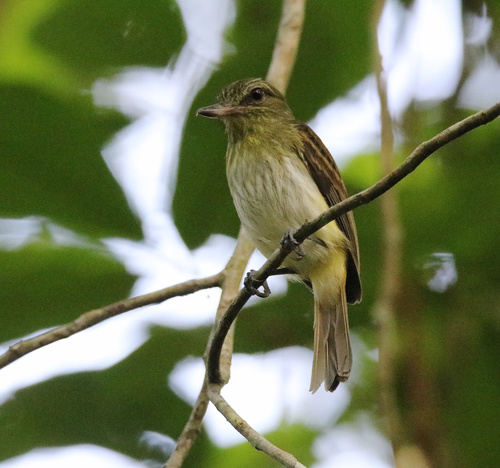 capitão-de-saíra-amarelo
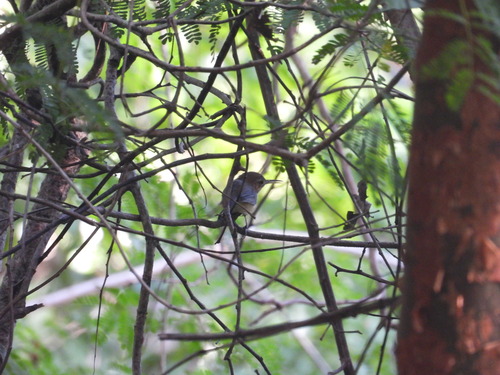 chirito
Em resumo
O capitão-de-saíra-amarelo e o chirito são distintos tanto em estrutura quanto em comportamento. O capitão é um pássaro maior com uma constituição robusta, enquanto o chirito é menor e mais esguio, com um bico notavelmente longo. A plumagem do capitão varia bastante, mas geralmente tem uma cauda brilhante, enquanto o chirito é mais uniforme com sutis variações nas partes inferiores.
Dicas de identificação
1. Tamanho e Estrutura: Procure pela constituição maior e robusta do capitão-de-saíra-amarelo em comparação com o menor e esguio chirito com um bico longo. 2. Plumagem: Note a cauda brilhante e as possíveis morfologias verde-oliva ou ruiva do capitão. 3. Comportamento: Observe a tendência do chirito de permanecer escondido em vegetação densa. 4. Vocalização: Escute a canção trêmula e vibrante do chirito.
Tamanho
O capitão-de-saíra-amarelo é maior e mais robusto em comparação com o menor e esguio chirito.
Plumagem
O capitão-de-saíra-amarelo apresenta variação significativa na plumagem, incluindo morfologias verde-oliva ou ruivas, e uma cauda brilhante. O chirito tem plumagem mais uniforme, com algumas populações apresentando gargantas com listras escuras e partes inferiores mais quentes.
Comportamento
O capitão-de-saíra-amarelo é mais frequentemente visto em áreas abertas em comparação com o chirito, que tende a ficar escondido em vegetação densa.
Habitat
O capitão-de-saíra-amarelo habita uma ampla gama de tipos de florestas, mas evita áreas fortemente perturbadas, enquanto o chirito é frequentemente encontrado em emaranhados densos de vegetação.
Voz
O chirito é melhor localizado por sua canção trêmula e vibrante, que contrasta com as variadas canções ao amanhecer do capitão-de-saíra-amarelo.