
Cuitlacoche Rojizo vs Zorzalito de Bicknell
Toxostoma rufum frente a Catharus bicknelli
Juega un quiz con Cuitlacoche Rojizo y Zorzalito de Bicknell
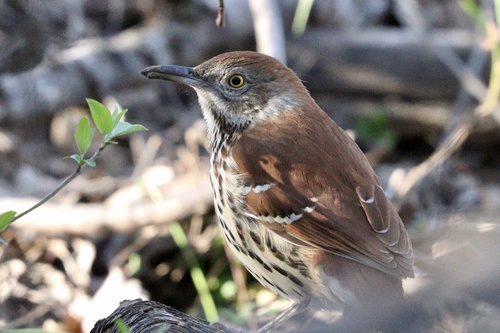 Cuitlacoche Rojizo
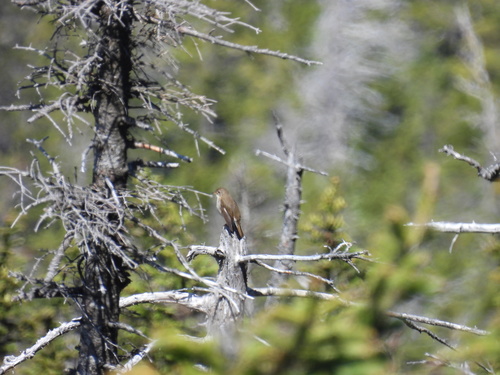 Zorzalito de Bicknell
En breve
El Cuitlacoche Rojizo y el Zorzalito de Bicknell se pueden distinguir por su estructura y preferencias de hábitat. El Cuitlacoche Rojizo es más grande, con un pico largo y ligeramente curvado y patas robustas, mientras que el Zorzalito de Bicknell es más pequeño y está más adaptado a los bosques de abeto y pícea de gran altitud. Sus vocalizaciones y comportamientos también difieren significativamente.
Consejos de identificación
1. Busca el tamaño más grande y el pico largo y ligeramente curvado del Cuitlacoche Rojizo. 2. Nota el hábitat: los Cuitlacoches Rojizos se encuentran en matorrales de tierras bajas, mientras que los Zorzalitos de Bicknell están en bosques de abeto y pícea de gran altitud. 3. Escucha la compleja canción del Cuitlacoche Rojizo, que es más variada que la del Zorzalito de Bicknell.
Tamaño
El Cuitlacoche Rojizo es más grande con una construcción más robusta en comparación con el más pequeño Zorzalito de Bicknell.
Comportamiento
Los Cuitlacoches Rojizos son forrajeadores terrestres con una tendencia a ocultarse en la maleza densa, mientras que el Zorzalito de Bicknell es más probable que se encuentre en hábitats perturbados o de gran altitud.
Hábitat
Los Cuitlacoches Rojizos habitan en matorrales y setos en claros y bordes de bosques de hojas caducas, principalmente en el este de los Estados Unidos. El Zorzalito de Bicknell prefiere bosques de abeto y pícea de gran altitud y hábitats perturbados.
Voz
El Cuitlacoche Rojizo es un cantante notable con uno de los repertorios más grandes entre los paserinos de América del Norte, mientras que el Zorzalito de Bicknell tiene características vocales distintas que difieren de sus parientes cercanos.
Cuitlacoche Rojizo · Zorzalito de Bicknell · Mis aves difíciles