
Anambé Grande vs Orejerito Oliváceo
Pachyramphus validus frente a Phylloscartes ventralis
Juega un quiz con Anambé Grande y Orejerito Oliváceo
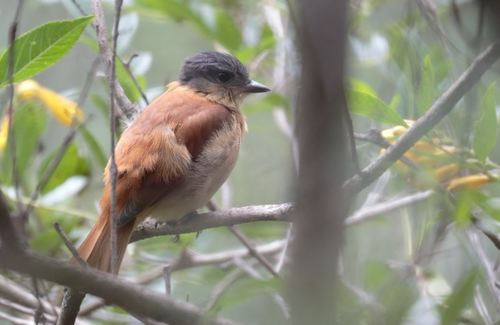 Anambé Grande
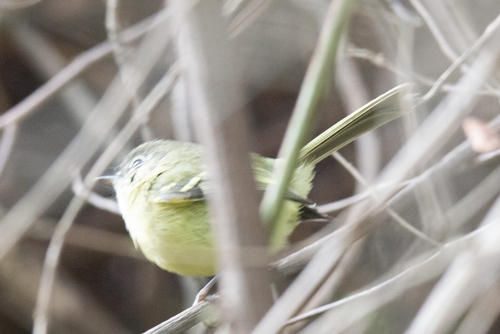 Orejerito Oliváceo
En breve
El Anambé Grande y el Orejerito Oliváceo difieren notablemente en plumaje y comportamiento. El Anambé Grande tiene una cresta distintiva, mientras que el Orejerito Oliváceo es de color verde oliva con barras alares y marcas tertiales blancas. Comportamentalmente, el Orejerito es más activo y a menudo se une a bandadas de especies mixtas.
Consejos de identificación
Busca la cresta en el Anambé Grande. Nota el plumaje verde oliva con barras alares y marcas tertiales blancas en el Orejerito Oliváceo. Observa el comportamiento: el Orejerito a menudo está en bandadas de especies mixtas y es muy activo.
Plumaje
El Anambé Grande se distingue por su cresta, mientras que el Orejerito Oliváceo es de color verde oliva por encima, más pálido por debajo, con barras alares evidentes y marcas blancas prominentes en las tertiales.
Comportamiento
El Orejerito Oliváceo se posa horizontalmente, mantiene su cola ligeramente levantada y es muy activo, a menudo uniéndose a bandadas de especies mixtas. El comportamiento del Anambé Grande no está detallado en las notas.
Hábitat
El Orejerito Oliváceo habita en hábitats forestales a altitudes de 1000–2200 m. No se proporcionan detalles del hábitat para el Anambé Grande.