
Malcoha Africano Oriental vs Estornino Orejiazul
Ceuthmochares australis frente a Lamprotornis chalybaeus
Juega un quiz con Malcoha Africano Oriental y Estornino Orejiazul
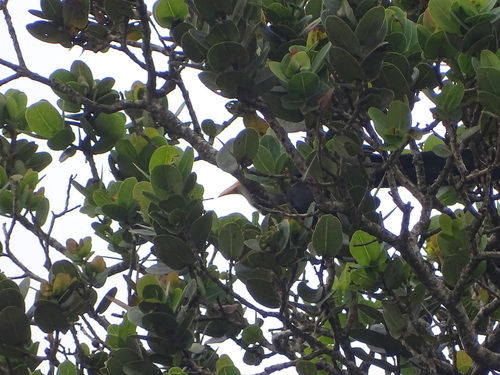 Malcoha Africano Oriental
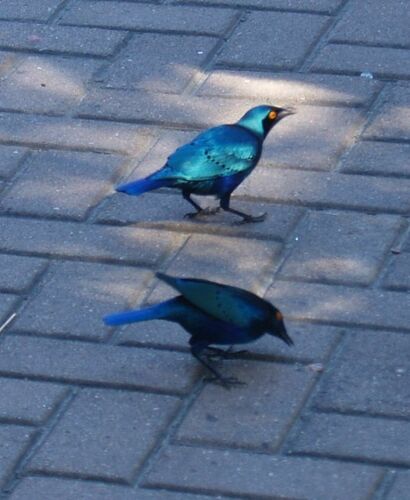 Estornino Orejiazul
En breve
La Malcoha Africano Oriental y el Estornino Orejiazul se pueden distinguir por su color de pico y brillo del plumaje. La Malcoha Africano Oriental tiene un pico amarillo cromado brillante y un brillo verde variable en sus partes superiores, mientras que el Estornino Orejiazul presenta un pico más oscuro y una iridiscencia azul-verde más consistente. Ambas especies habitan diferentes entornos, lo que ayuda en la identificación.
Consejos de identificación
Busque el pico amarillo cromado brillante de la Malcoha Africano Oriental y su preferencia por matorrales densos. En contraste, el Estornino Orejiazul tendrá un pico más oscuro y es más probable que se encuentre en áreas abiertas con un brillo azul-verde consistente.
Plumaje
La Malcoha Africano Oriental es generalmente oscura con un brillo verde variable, mientras que el Estornino Orejiazul muestra una iridiscencia azul-verde más consistente. El pico amarillo cromado brillante de la Malcoha Africano Oriental contrasta con el pico más oscuro del estornino.
Hábitat
Las Malcohas Africanas Orientales se encuentran típicamente en enredaderas enredadas y matorrales densos en los bordes del bosque, mientras que los Estorninos Orejiazul son más propensos a ser vistos en áreas abiertas.
Voz
Las Malcohas Africanas Orientales a menudo se detectan por sus distintivas vocalizaciones metálicas de clic, que difieren de las vocalizaciones del Estornino Orejiazul.
Malcoha Africano Oriental · Estornino Orejiazul · Mis aves difíciles