
Green Malkoha vs Greater Blue-eared Starling
Ceuthmochares australis contro Lamprotornis chalybaeus
Fai un quiz con Green Malkoha e Greater Blue-eared Starling
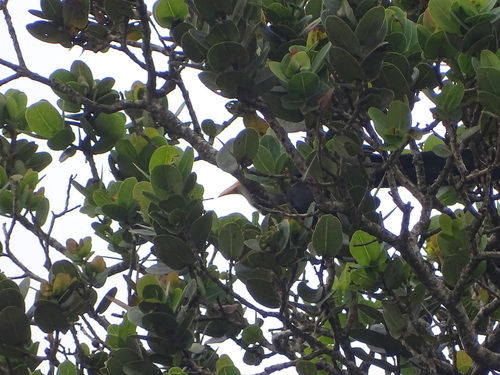 Green Malkoha
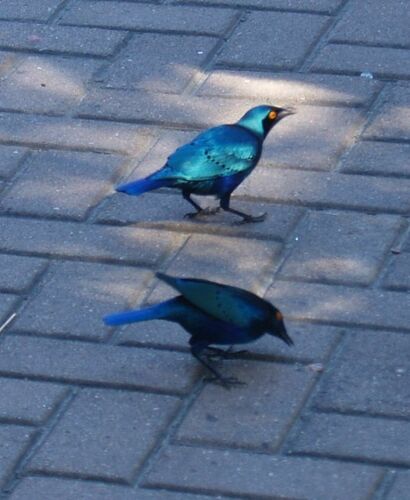 Greater Blue-eared Starling
In breve
Il Green Malkoha e il Greater Blue-eared Starling possono essere distinti dal loro colore del becco e lucentezza del piumaggio. Il Green Malkoha ha un becco giallo cromo brillante e una lucentezza verde variabile sulle sue parti superiori, mentre il Greater Blue-eared Starling presenta un becco più scuro e un'iridescenza blu-verde più consistente. Entrambe le specie abitano ambienti diversi, facilitando l'identificazione.
Consigli di identificazione
Cerca il becco giallo cromo brillante del Green Malkoha e la sua preferenza per i cespugli densi. Al contrario, il Greater Blue-eared Starling avrà un becco più scuro ed è più probabile trovarlo in aree aperte con una lucentezza blu-verde consistente.
Piumaggio
Il Green Malkoha è generalmente scuro con una lucentezza verde variabile, mentre il Greater Blue-eared Starling mostra un'iridescenza blu-verde più consistente. Il becco giallo cromo brillante del Green Malkoha contrasta con il becco più scuro dello storno.
Habitat
I Green Malkoha si trovano tipicamente in rampicanti aggrovigliati e cespugli densi ai margini delle foreste, mentre i Greater Blue-eared Starlings sono più probabili da vedere in aree aperte.
Voce
I Green Malkoha vengono spesso rilevati dalle loro distintive vocalizzazioni metalliche a clic, che differiscono dalle vocalizzazioni del Greater Blue-eared Starling.
Green Malkoha · Greater Blue-eared Starling · I miei uccelli difficili