
Gaviota Guanaguanare vs Gaviota de Alaska
Leucophaeus atricilla frente a Larus brachyrhynchus
Juega un quiz con Gaviota Guanaguanare y Gaviota de Alaska
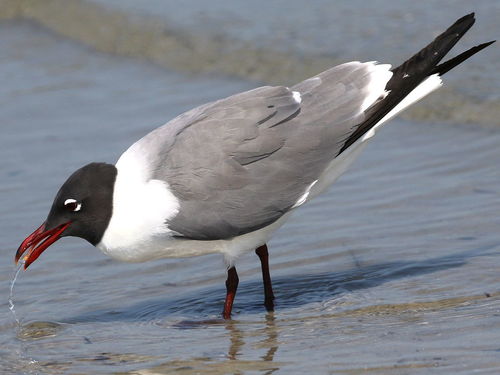 Gaviota Guanaguanare
 Gaviota de Alaska
En breve
La Gaviota Guanaguanare se distingue por su capucha negra y sus medias lunas oculares blancas, mientras que la Gaviota de Alaska carece de capucha y tiene una cabeza blanca. La Gaviota Guanaguanare es más costera, a menudo se encuentra a lo largo de las costas atlántica y del Golfo, mientras que la Gaviota de Alaska se encuentra principalmente a lo largo de la costa del Pacífico.
Consejos de identificación
- Busca la capucha negra y las medias lunas oculares blancas en la Gaviota Guanaguanare durante la temporada de cría.
- La Gaviota de Alaska tiene una cabeza blanca y carece de capucha, típico de las gaviotas de cabeza blanca.
- Considera la ubicación: las Gaviotas Guanaguanare son más comunes en las costas atlántica y del Golfo, mientras que las Gaviotas de Alaska se encuentran a lo largo de la costa del Pacífico.
Tamaño
La Gaviota Guanaguanare es generalmente más grande que la Gaviota de Alaska.
Plumaje
Gaviota Guanaguanare: Capucha negra durante la temporada de cría, manto gris oscuro, medias lunas oculares blancas. Gaviota de Alaska: Cabeza blanca, carece de capucha, apariencia típica de gaviota de cabeza blanca.
Comportamiento
Las Gaviotas Guanaguanare son conocidas por sus exhibiciones de cortejo y a menudo se ven siguiendo barcos de pesca. Las Gaviotas de Alaska exhiben una variedad de técnicas de forrajeo, incluyendo el kleptoparasitismo.
Hábitat
Las Gaviotas Guanaguanare se encuentran típicamente en costas arenosas o rocosas e islas de marismas salinas a lo largo de las costas atlántica y del Golfo. Las Gaviotas de Alaska se encuentran en playas y estuarios de ríos a lo largo de la costa del Pacífico, y son más adaptables a diferentes hábitats, incluyendo ambientes de agua dulce y marina.
Voz
Las Gaviotas Guanaguanare tienen un llamado distintivo, melodioso y risueño. Las notas no proporcionan detalles específicos de vocalización para la Gaviota de Alaska.
Gaviota Guanaguanare · Gaviota de Alaska · Mis aves difíciles