
gaivota-alegre vs famego-americano
Leucophaeus atricilla versus Larus brachyrhynchus
Jogue um quiz com gaivota-alegre e famego-americano
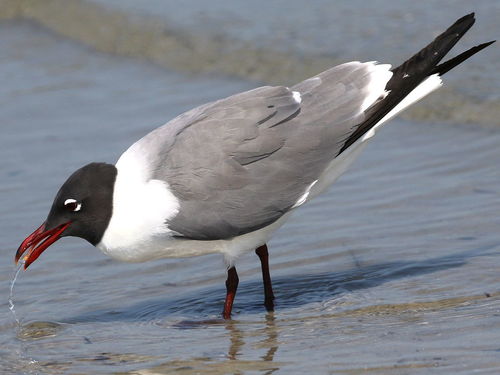 gaivota-alegre
 famego-americano
Em resumo
A gaivota-alegre é distinguida por sua capuz preto e por seus crescentes oculares brancos, enquanto o famego-americano não possui capuz e tem uma cabeça branca. A gaivota-alegre é mais costeira, frequentemente encontrada ao longo das costas do Atlântico e do Golfo, enquanto o famego-americano é encontrado principalmente ao longo da costa do Pacífico.
Dicas de identificação
- Procure pelo capuz preto e pelos crescentes oculares brancos na gaivota-alegre durante a época de reprodução.
- O famego-americano tem uma cabeça branca e não possui capuz, típico das gaivotas de cabeça branca.
- Considere a localização: as gaivotas-alegres são mais comuns nas costas do Atlântico e do Golfo, enquanto os famegos-americanos são encontrados ao longo da costa do Pacífico.
Tamanho
A gaivota-alegre é geralmente maior que o famego-americano.
Plumagem
Gaivota-alegre: Capuz preto durante a época de reprodução, manto cinza escuro, crescentes oculares brancos. Famego-americano: Cabeça branca, não possui capuz, aparência típica de gaivotas de cabeça branca.
Comportamento
As gaivotas-alegres são conhecidas por suas exibições de corte e frequentemente são vistas seguindo barcos de pesca. Os famegos-americanos exibem uma variedade de técnicas de forrageamento, incluindo cleptoparasitismo.
Habitat
As gaivotas-alegres são tipicamente encontradas em praias de areia ou rochosas e ilhas de pântano salgado ao longo das costas do Atlântico e do Golfo. Os famegos-americanos são encontrados em praias e estuários de rios ao longo da costa do Pacífico e são mais adaptáveis a diferentes habitats, incluindo ambientes de água doce e marinhos.
Voz
As gaivotas-alegres têm um chamado distinto, alegre e melodioso. As notas não fornecem detalhes específicos sobre a vocalização do famego-americano.