
Porrón Bola vs Cuitlacoche Piquicurvo
Aythya affinis frente a Toxostoma curvirostre
Juega un quiz con Porrón Bola y Cuitlacoche Piquicurvo
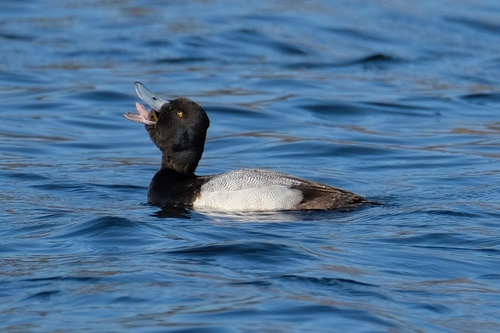 Porrón Bola
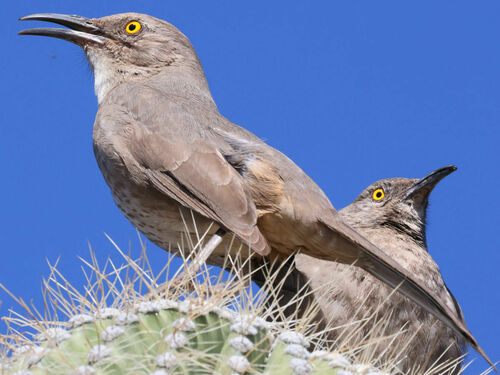 Cuitlacoche Piquicurvo
En breve
El Porrón Bola y el Cuitlacoche Piquicurvo se distinguen fácilmente por su estructura y preferencias de hábitat. El Porrón Bola es un pato buceador con una cabeza redondeada y un pico ancho, mientras que el Cuitlacoche Piquicurvo es un pájaro cantor con un pico largo y curvado y un cuerpo esbelto. Ocupan hábitats diferentes, con el porrón encontrado en cuerpos de agua y el cuitlacoche en regiones áridas.
Consejos de identificación
Look for habitat: Porrón en agua, Cuitlacoche en el desierto. Check bill shape: Porrón tiene un pico ancho y plano; Cuitlacoche tiene un pico largo y curvado. Observe behavior: Porrón bucea; Cuitlacoche forajea en tierra.
Tamaño
El Porrón Bola es un pato de tamaño mediano, más grande y robusto que el esbelto Cuitlacoche Piquicurvo.
Plumaje
El Porrón Bola tiene un plumaje predominantemente gris y blanco con una cabeza y pecho negros, mientras que el Cuitlacoche Piquicurvo es uniformemente gris-marrón con manchas tenues en el pecho.
Comportamiento
Los Porrones Bola a menudo se ven buceando en el agua, mientras que los Cuitlacoches Piquicurvos son más terrestres, forajeando en el suelo.
Hábitat
Los Porrones Bola se encuentran típicamente en lagos y estanques de agua dulce, mientras que los Cuitlacoches Piquicurvos habitan en matorrales desérticos y regiones áridas.
Voz
El Cuitlacoche Piquicurvo es conocido por su canto variado y melodioso, a diferencia del Porrón Bola, que generalmente es silencioso.