
Lesser Scaup vs Curve-billed Thrasher
Aythya affinis contro Toxostoma curvirostre
Fai un quiz con Lesser Scaup e Curve-billed Thrasher
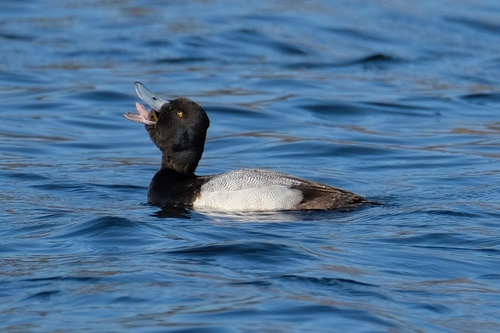 Lesser Scaup
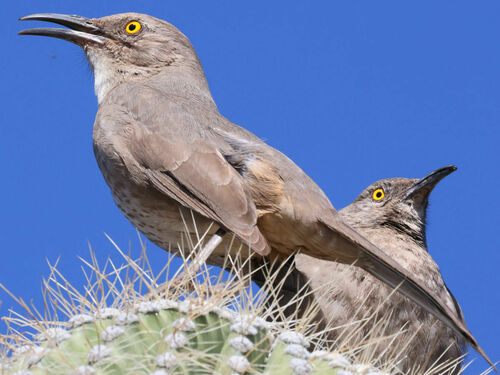 Curve-billed Thrasher
In breve
Il Lesser Scaup e il Curve-billed Thrasher sono facilmente distinguibili per la loro struttura e le preferenze di habitat. Il Lesser Scaup è un'anatra tuffatrice con una testa arrotondata e un becco largo, mentre il Curve-billed Thrasher è un uccello canoro con un becco lungo e curvo e un corpo snello. Occupano habitat diversi, con il scaup trovato in corpi d'acqua e il thrasher in regioni aride.
Consigli di identificazione
Look for habitat: Scaup su acqua, Thrasher nel deserto. Check bill shape: Scaup ha un becco largo e piatto; Thrasher ha un becco lungo e curvo. Observe behavior: Scaup tuffa; Thrasher cerca cibo a terra.
Taglia
Il Lesser Scaup è un'anatra di taglia media, più grande e robusta rispetto al snello Curve-billed Thrasher.
Piumaggio
Il Lesser Scaup ha un piumaggio prevalentemente grigio e bianco con una testa e un petto neri, mentre il Curve-billed Thrasher è uniformemente grigio-marrone con macchie deboli sul petto.
Comportamento
I Lesser Scaup sono spesso visti tuffarsi in acqua, mentre i Curve-billed Thrashers sono più terrestri, cercando cibo a terra.
Habitat
I Lesser Scaup si trovano tipicamente in laghi e stagni d'acqua dolce, mentre i Curve-billed Thrashers abitano in cespugli desertici e regioni aride.
Voce
Il Curve-billed Thrasher è noto per il suo canto vario e melodioso, a differenza del Lesser Scaup, che è generalmente silenzioso.
Lesser Scaup · Curve-billed Thrasher · I miei uccelli difficili