Birdr

Soterillo Picudo vs Toquí Orejiblanco

Ramphocaenus melanurus frente a Melozone leucotis

Juega un quiz con Soterillo Picudo y Toquí Orejiblanco
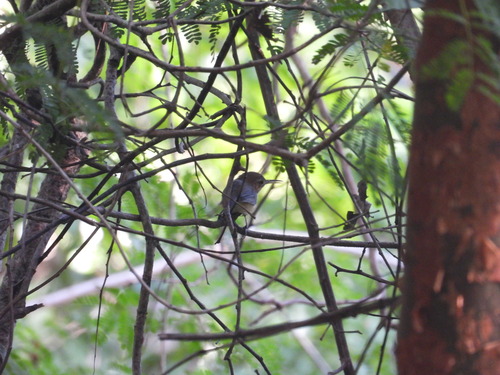
Soterillo Picudo (Ramphocaenus melanurus) Soterillo Picudo
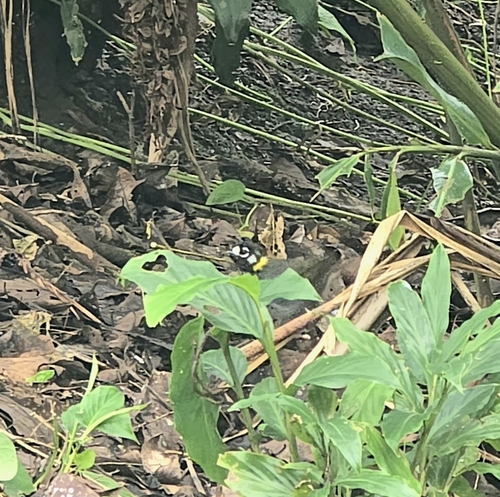
Toquí Orejiblanco (Melozone leucotis) Toquí Orejiblanco

Medios

Cargando…

En breve

El Soterillo Picudo y el Toquí Orejiblanco difieren más notablemente en sus preferencias de hábitat y comportamiento. El Soterillo Picudo se encuentra típicamente escondido en vegetación densa, mientras que el Toquí Orejiblanco se ve más a menudo en o cerca del suelo. Sus vocalizaciones también difieren, con el Soterillo Picudo teniendo una canción trémula y vibrante.

Consejos de identificación

Busque el Soterillo Picudo en vegetación densa y escuche su canción trémula. El Toquí Orejiblanco es más probable que se vea en o cerca del suelo en áreas abiertas.

Comportamiento

El Soterillo Picudo tiende a permanecer escondido dentro de enredos densos de vegetación, a menudo bien por encima del suelo. En contraste, el Toquí Orejiblanco es más terrestre, a menudo visto buscando alimento en o cerca del suelo.

Hábitat

El Soterillo Picudo se encuentra típicamente en vegetación densa, mientras que el Toquí Orejiblanco es más probable que se encuentre en áreas abiertas o cerca del suelo.

Voz

El Soterillo Picudo se localiza mejor por su canción trémula y vibrante, que contrasta con las vocalizaciones del Toquí Orejiblanco.

Enviar una descripción mejor

Usa las mismas secciones que la comparación. El texto se publica al momento.

The Long-billed Gnatwren and the White-eared Ground-Sparrow differ most notably in their habitat preferences and behavior. The Gnatwren is typically found hidden in dense vegetation, while the Ground-Sparrow is more often seen on or near the ground. Their vocalizations also differ, with the Gnatwren having a rattled, trilling song.

Look for the Long-billed Gnatwren in dense vegetation and listen for its trilling song. The White-eared Ground-Sparrow is more likely to be seen on or near the ground in open areas.

The Long-billed Gnatwren tends to stay hidden within dense tangles of vegetation, often well above the ground. In contrast, the White-eared Ground-Sparrow is more terrestrial, often seen foraging on or near the ground.

The Long-billed Gnatwren is typically found in dense vegetation, while the White-eared Ground-Sparrow is more likely to be found in open areas or near the ground.

The Long-billed Gnatwren is best located by its rattled, trilling song, which contrasts with the vocalizations of the White-eared Ground-Sparrow.

¿Descartar los cambios?

Tienes ediciones sin guardar. Si sales ahora, se perderán.

Soterillo Picudo · Toquí Orejiblanco · Mis aves difíciles