
Orejerito Oliváceo vs Titirijí Perlado
Phylloscartes ventralis frente a Hemitriccus margaritaceiventer
Juega un quiz con Orejerito Oliváceo y Titirijí Perlado
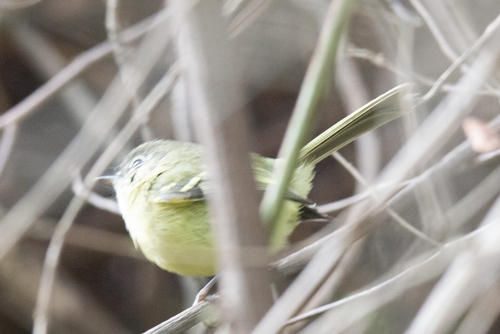 Orejerito Oliváceo
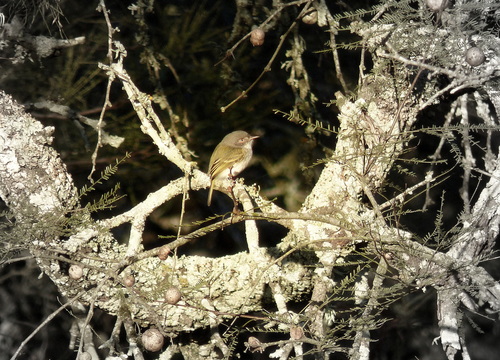 Titirijí Perlado
En breve
El Orejerito Oliváceo y el Titirijí Perlado se pueden distinguir por su plumaje y comportamiento. El Orejerito Oliváceo es de color verde olivo con marcas blancas prominentes en las alas, mientras que el Titirijí Perlado tiene un plumaje más sutil. Comportamentalmente, el Orejerito Oliváceo es más activo y a menudo se une a bandadas de especies mixtas.
Consejos de identificación
Busque plumaje verde olivo con marcas blancas en las alas en el Orejerito Oliváceo. Observe el comportamiento: si el pájaro está forrajeando activamente y uniéndose a bandadas de especies mixtas, es probable que sea un Orejerito Oliváceo.
Plumaje
El Orejerito Oliváceo es principalmente de color verde olivo en la parte superior con barras de alas obvias y marcas blancas prominentes en las terciarias. En contraste, el Titirijí Perlado tiene un plumaje menos distintivo, careciendo de las prominentes marcas blancas en las alas.
Comportamiento
El Orejerito Oliváceo se posó ampliamente en horizontal, sostiene su cola ligeramente levantada y es muy activo, a menudo uniéndose a bandadas de especies mixtas. El comportamiento del Titirijí Perlado no está detallado en las notas.