
borboletinha-do-mato vs sebinho-de-olho-de-ouro
Phylloscartes ventralis versus Hemitriccus margaritaceiventer
Jogue um quiz com borboletinha-do-mato e sebinho-de-olho-de-ouro
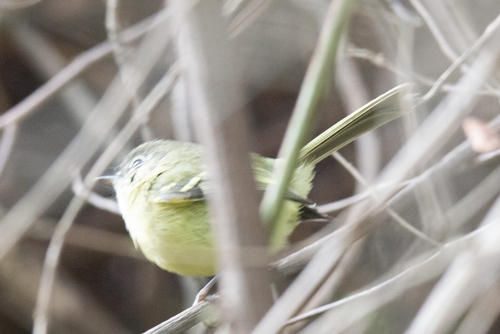 borboletinha-do-mato
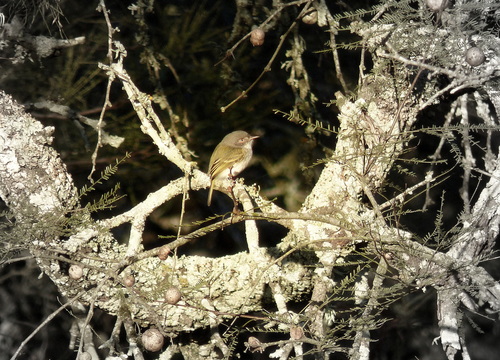 sebinho-de-olho-de-ouro
Em resumo
A borboletinha-do-mato e o sebinho-de-olho-de-ouro podem ser distinguidos por sua plumagem e comportamento. A borboletinha-do-mato é verde-oliva com marcas brancas proeminentes nas asas, enquanto o sebinho-de-olho-de-ouro tem uma plumagem mais sutil. Comportamentalmente, a borboletinha-do-mato é mais ativa e frequentemente se junta a bandos de espécies mistas.
Dicas de identificação
Procure por plumagem verde-oliva com marcas brancas nas asas na borboletinha-do-mato. Observe o comportamento: se o pássaro estiver forrageando ativamente e se juntando a bandos de espécies mistas, é provável que seja uma borboletinha-do-mato.
Plumagem
A borboletinha-do-mato é principalmente verde-oliva por cima com barras de asas óbvias e marcas brancas proeminentes nas tertiais. Em contraste, o sebinho-de-olho-de-ouro tem uma plumagem menos distinta, sem as marcas brancas proeminentes nas asas.
Comportamento
A borboletinha-do-mato empoleira-se amplamente na horizontal, mantém a cauda ligeiramente levantada e é muito ativa, frequentemente se juntando a bandos de espécies mistas. O comportamento do sebinho-de-olho-de-ouro não está detalhado nas notas.
borboletinha-do-mato · sebinho-de-olho-de-ouro · Minhas aves difíceis