
Zampullín Picogrueso vs Gallineta Americana
Podilymbus podiceps frente a Gallinula galeata
Juega un quiz con Zampullín Picogrueso y Gallineta Americana
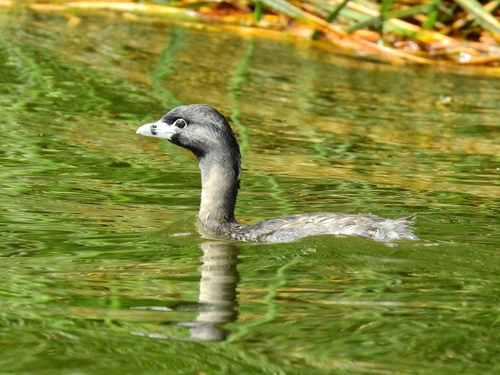 Zampullín Picogrueso
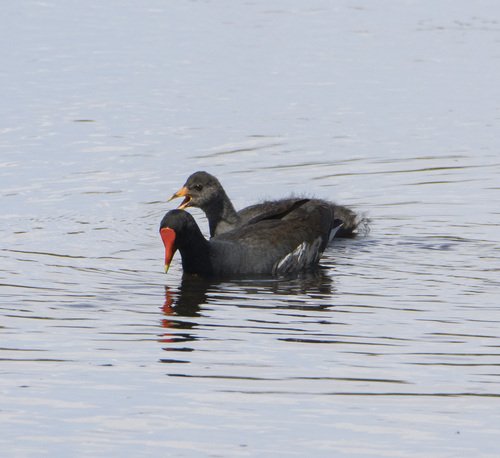 Gallineta Americana
En breve
El Zampullín Picogrueso y la Gallineta Americana se pueden distinguir por sus picos y preferencias de hábitat. El zampullín tiene un pico distintivo, corto, alto y arqueado de color blanco azulado y una barra negra vertical durante la temporada de cría, mientras que la gallineta tiene un pico más típico de gallinule. El zampullín es más reservado y a menudo se encuentra en aguas abiertas, mientras que la gallineta es más gregaria y se asocia con los bordes de los pantanos.
Consejos de identificación
Forma y color del pico: Busque el pico corto, alto y arqueado del Zampullín Picogrueso de color blanco azulado y una barra negra vertical en la temporada de cría. Comportamiento: Observe la tendencia del zampullín a zambullirse o hundirse para escapar, en comparación con el comportamiento más social de la gallineta.
Plumaje
El Zampullín Picogrueso tiene plumaje marrón, mientras que el plumaje de la Gallineta Americana no se detalla en las notas, pero es generalmente más oscuro y más similar al de una gallinule.
Comportamiento
El Zampullín Picogrueso es reservado, a menudo zambulléndose o hundiéndose para escapar del peligro, mientras que la Gallineta Americana es más gregaria, especialmente en invierno.
Hábitat
El Zampullín Picogrueso se encuentra comúnmente en pantanos de agua dulce, lagos y ríos lentos, y en invierno, en estuarios salobres. La Gallineta Americana se asocia con pantanos, estanques, canales, zanjas y campos de arroz con una mezcla de vegetación sumergida y emergente.
Voz
El Zampullín Picogrueso tiene un llamado de 'caow caow caow' que se escucha a menudo antes de ver al ave. Las vocalizaciones de la Gallineta Americana no se detallan en las notas.
Zampullín Picogrueso · Gallineta Americana · Mis aves difíciles