
Picoguadaña Piquirrojo vs Trepatroncos Chinchero
Campylorhamphus trochilirostris frente a Drymornis bridgesii
Juega un quiz con Picoguadaña Piquirrojo y Trepatroncos Chinchero
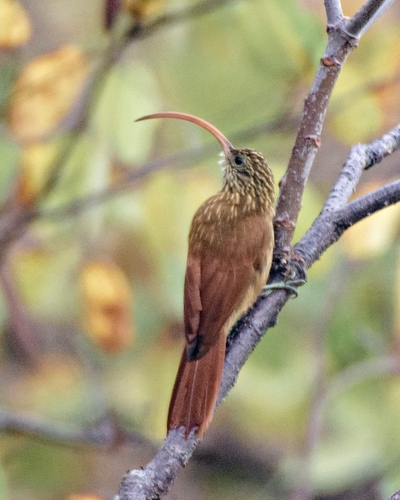 Picoguadaña Piquirrojo
 Trepatroncos Chinchero
En breve
La forma del pico es la marca de campo más confiable para distinguir estas especies: el Picoguadaña Piquirrojo tiene un pico largo y curvado hacia abajo de color rojo, mientras que el Trepatroncos Chinchero tiene un pico igualmente largo pero con forma más de cimitarra. Ambas especies son trepatroncos, pero su plumaje y comportamiento ofrecen pistas adicionales.
Consejos de identificación
Busque el pico rojo del Picoguadaña Piquirrojo como un identificador principal. Observe la forma del pico: una curva más parecida a una cimitarra indica el Trepatroncos Chinchero. Note cualquier estriado color canela en el plumaje del Picoguadaña Piquirrojo.
Plumaje
El Picoguadaña Piquirrojo presenta estriado color canela en la cabeza, la parte superior de la espalda y el pecho, mientras que los detalles del plumaje del Trepatroncos Chinchero no se especifican aquí, lo que sugiere un estriado menos distintivo.
Comportamiento
El Picoguadaña Piquirrojo a menudo acompaña bandadas mixtas y se alimenta de invertebrados arbóreos al trepar por troncos y ramas.
Voz
El Trepatroncos Chinchero tiene vocalizaciones distintivas, aunque no se proporcionan detalles específicos aquí.
Picoguadaña Piquirrojo · Trepatroncos Chinchero · Mis aves difíciles