
Red-billed Scythebill vs Scimitar-billed Woodcreeper
Campylorhamphus trochilirostris contro Drymornis bridgesii
Fai un quiz con Red-billed Scythebill e Scimitar-billed Woodcreeper
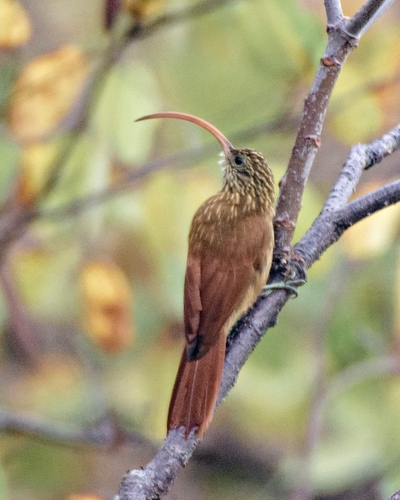 Red-billed Scythebill
 Scimitar-billed Woodcreeper
In breve
La forma del becco è il segno distintivo più affidabile per distinguere queste specie: il Red-billed Scythebill ha un lungo becco rosso, curvato verso il basso, mentre il Scimitar-billed Woodcreeper ha un becco altrettanto lungo ma più a forma di scimitarra. Entrambe le specie sono woodcreepers, ma il loro piumaggio e comportamento offrono indizi aggiuntivi.
Consigli di identificazione
Cerca il becco rosso del Red-billed Scythebill come identificatore principale. Osserva la forma del becco: una curva più simile a una scimitarra indica il Scimitar-billed Woodcreeper. Nota eventuali striature color crema sul piumaggio del Red-billed Scythebill.
Piumaggio
Il Red-billed Scythebill presenta striature color crema sulla testa, sulla parte superiore della schiena e sul petto, mentre i dettagli del piumaggio del Scimitar-billed Woodcreeper non sono specificati qui, suggerendo striature meno distintive.
Comportamento
Il Red-billed Scythebill accompagna spesso gruppi misti e si nutre di invertebrati arborei arrampicandosi lungo tronchi e rami.
Voce
Il Scimitar-billed Woodcreeper ha vocalizzazioni distintive, anche se i dettagli specifici non sono forniti qui.
Red-billed Scythebill · Scimitar-billed Woodcreeper · I miei uccelli difficili