
Trepatroncos Rojizo vs Trepatroncos Fuliginoso
Dendrocincla homochroa frente a Dendrocincla fuliginosa
Juega un quiz con Trepatroncos Rojizo y Trepatroncos Fuliginoso
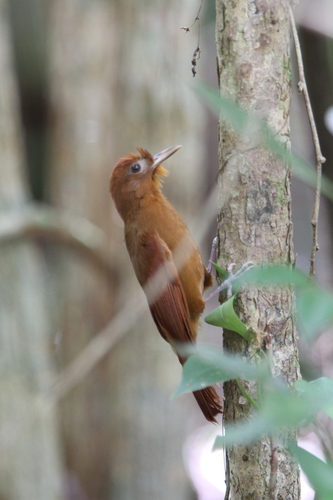 Trepatroncos Rojizo
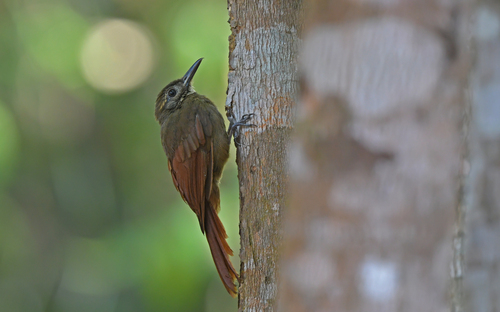 Trepatroncos Fuliginoso
En breve
El Trepatroncos Rojizo y el Trepatroncos Fuliginoso son similares en estructura, pero se pueden diferenciar por su pico y plumaje. El Trepatroncos Rojizo tiene un pico corto, robusto y bastante recto, y lóbulos grisáceos, mientras que el Trepatroncos Fuliginoso presenta un pico negro, un supercilio débil y una franja malar prominente.
Consejos de identificación
- Forma y color del pico: El Trepatroncos Rojizo tiene un pico corto, robusto y bastante recto, mientras que el Trepatroncos Fuliginoso tiene un pico negro. 2. Marcas faciales: Busca los lóbulos grisáceos en el Trepatroncos Rojizo frente al supercilio débil y la franja malar prominente del Trepatroncos Fuliginoso. 3. Comportamiento: Observa la tendencia del Trepatroncos Rojizo a seguir enjambres de hormigas legionarias, a diferencia del comportamiento más solitario o en bandadas mixtas del Trepatroncos Fuliginoso.
Plumaje
El Trepatroncos Rojizo muestra lóbulos grisáceos y carece de las rayas o manchas que se ven en otros trepatroncos. El Trepatroncos Fuliginoso, por otro lado, tiene un supercilio débil y una franja malar prominente, con un tono más rufescente tanto arriba como abajo.
Comportamiento
El Trepatroncos Rojizo depende en gran medida de los enjambres de hormigas legionarias y se suele ver dentro de bandadas móviles y mixtas. El Trepatroncos Fuliginoso, aunque a menudo se encuentra cerca de hormigas legionarias, no es un seguidor obligado y se puede ver alimentándose solo o con otras bandadas de especies mixtas.
Trepatroncos Rojizo · Trepatroncos Fuliginoso · Mis aves difíciles