
Eufonia Matorralera vs Eufonia Piquigruesa
Euphonia affinis frente a Euphonia laniirostris
Juega un quiz con Eufonia Matorralera y Eufonia Piquigruesa
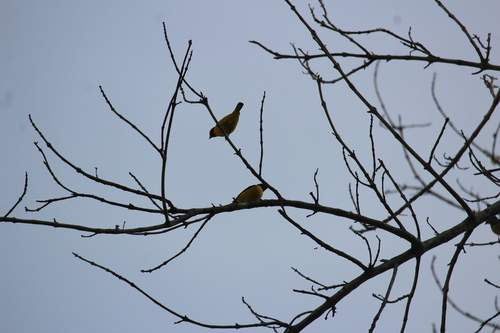 Eufonia Matorralera
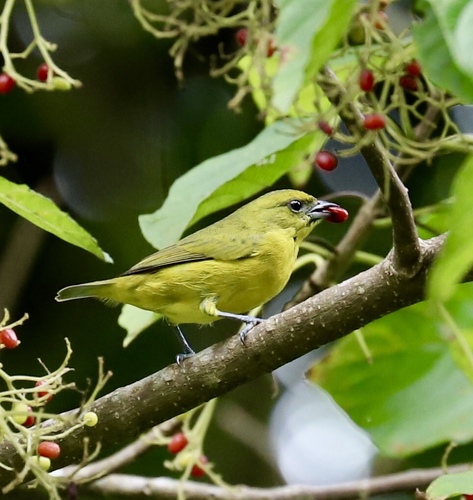 Eufonia Piquigruesa
En breve
El tamaño del pico es la marca de campo más confiable: la Eufonia Piquigruesa tiene un pico notablemente más grueso en comparación con la Eufonia Matorralera. Los machos de ambas especies tienen partes inferiores amarillas, pero la Eufonia Piquigruesa tiene una parte superior de un azul acero brillante, mientras que la Eufonia Matorralera es generalmente menos brillante.
Consejos de identificación
- Tamaño del pico: Busca el pico más grueso en la Eufonia Piquigruesa.
- Brillo del plumaje: Nota las partes superiores de un azul acero brillante en los machos de Eufonia Piquigruesa.
- Vocalizaciones: Escucha las notas dobles o triples de la Eufonia Matorralera.
Plumaje
Los machos de Eufonia Piquigruesa son de un azul acero brillante con una mancha amarilla en la frente que se extiende justo detrás del ojo y partes inferiores de un amarillo brillante, incluyendo la garganta. Las Eufonias Matorraleras tienen un plumaje menos brillante, con machos que también muestran partes inferiores amarillas pero carecen del extenso brillo azul acero.
Comportamiento
Ambas especies se encuentran típicamente en parejas o pequeños grupos y a menudo se unen a bandadas de especies mixtas.
Hábitat
Las Eufonias Matorraleras habitan una variedad de entornos que van desde bosques áridos hasta húmedos, bosques arbustivos y tierras agrícolas con árboles dispersos. Las Eufonias Piquigruesas se encuentran por debajo de 1200 m en bosques secundarios, bordes de bosques y claros y jardines arbustivos.
Voz
Las Eufonias Matorraleras tienen notas distintivas dobles o triples, que difieren de las diversas notas de llamada de la Eufonia Piquigruesa.
Eufonia Matorralera · Eufonia Piquigruesa · Mis aves difíciles