
Cucarachero Culibarrado vs Cucarachero Colinegro
Cistothorus stellaris frente a Thryomanes bewickii
Juega un quiz con Cucarachero Culibarrado y Cucarachero Colinegro
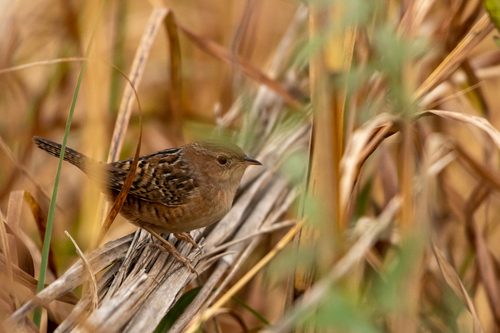 Cucarachero Culibarrado
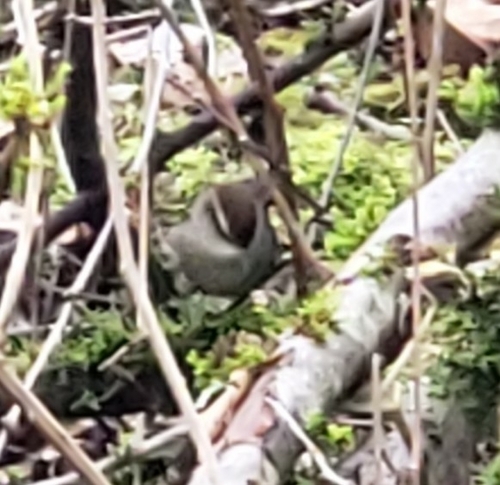 Cucarachero Colinegro
En breve
Para distinguir entre el Cucarachero Culibarrado y el Cucarachero Colinegro, enfócate en el hábitat y el comportamiento. Los Cucaracheros Culibarrados se encuentran a menudo en áreas húmedas y herbáceas y son más nómadas, mientras que los Cucaracheros Colinegros prefieren bosques abiertos y matorrales y son más estacionarios. Las vocalizaciones también difieren significativamente entre las dos especies.
Consejos de identificación
- Hábitat: Busca Cucaracheros Culibarrados en áreas húmedas y herbáceas y Cucaracheros Colinegros en bosques abiertos o matorrales.
- Comportamiento: Nota la naturaleza nómada de los Cucaracheros Culibarrados frente a los Cucaracheros Colinegros más estacionarios.
- Vocalización: Escucha las canciones distintas de cada especie, ya que los Cucaracheros Colinegros tienen un repertorio de canciones variado.
Comportamiento
Los Cucaracheros Culibarrados son altamente nómadas y se pueden encontrar en diferentes partes de su rango dependiendo de la época del año. Los Cucaracheros Colinegros son más estacionarios, a menudo tienen dos crías por temporada, y buscan alimento cerca del suelo.
Hábitat
Los Cucaracheros Culibarrados se encuentran en hábitats húmedos y herbáceos que son susceptibles a secarse o inundarse. Los Cucaracheros Colinegros prefieren bosques abiertos, matorrales en tierras altas y áreas con estructuras similares a cavidades.
Voz
Los Cucaracheros Culibarrados tienen vocalizaciones que son distintas de las de los Cucaracheros Colinegros, siendo estos últimos los que tienen canciones geográficamente variables y un gran repertorio.
Cucarachero Culibarrado · Cucarachero Colinegro · Mis aves difíciles