
Ruiseñor Calíope vs Papamoscas Narciso
Calliope calliope frente a Ficedula narcissina
Juega un quiz con Ruiseñor Calíope y Papamoscas Narciso
 Ruiseñor Calíope
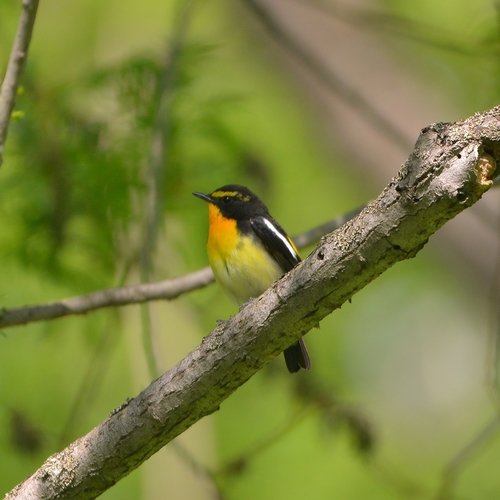 Papamoscas Narciso
En breve
El Ruiseñor Calíope y el Papamoscas Narciso se pueden distinguir principalmente por su plumaje y comportamiento. El macho del Ruiseñor Calíope es notable por su striking garganta roja, mientras que el macho del Papamoscas Narciso tiene un plumaje amarillo brillante y negro. Comportamentalmente, es más probable ver al Papamoscas Narciso cazando insectos en los árboles.
Consejos de identificación
Busque el parche de garganta roja en el macho del Ruiseñor Calíope, una característica clave de distinción. Para el Papamoscas Narciso, concéntrese en el plumaje amarillo brillante y negro del macho y escuche su canción musical. Observe el comportamiento: los Papamoscas Narciso son más activos en los árboles y participan en la caza de insectos.
Plumaje
El macho del Ruiseñor Calíope presenta un vívido parche de garganta roja, que contrasta con su plumaje marrón y blanco. En contraste, el macho del Papamoscas Narciso se caracteriza por sus partes inferiores amarillas brillantes y partes superiores negras. Las hembras de Ruiseñor Calíope son apagadas con marcas menos distintivas, mientras que las hembras de Papamoscas Narciso también son apagadas pero pueden confundirse con otras especies de papamoscas.
Comportamiento
Los Papamoscas Narciso a menudo se observan cazando insectos en los árboles y son conocidos por su variada y musical canción. Los Ruiseñores Calíope son menos conspicuos y no se asocian típicamente con el comportamiento de caza de insectos.
Voz
La canción del Papamoscas Narciso es altamente variada, musical y mimética, lo que puede ayudar a distinguirlo del Ruiseñor Calíope.