
Calliope vs Narcissus Flycatcher
Calliope calliope contro Ficedula narcissina
Fai un quiz con Calliope e Narcissus Flycatcher
 Calliope
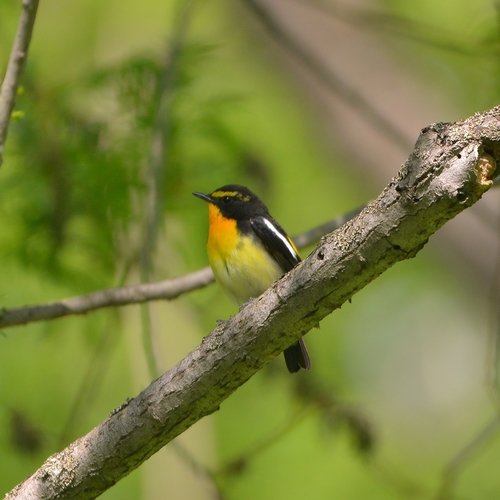 Narcissus Flycatcher
In breve
Il Calliope e il Narcissus Flycatcher possono essere distinti principalmente dal loro piumaggio e comportamento. Il maschio Calliope è noto per la sua gola rossa brillante, mentre il maschio Narcissus Flycatcher ha un piumaggio giallo e nero brillante. Comportamentalmente, il Narcissus Flycatcher è più propenso a essere visto mentre cattura insetti sugli alberi.
Consigli di identificazione
Cerca il patch di gola rossa sul maschio Calliope, una caratteristica distintiva chiave. Per il Narcissus Flycatcher, concentrati sul piumaggio giallo e nero brillante del maschio e ascolta il suo canto musicale. Osserva il comportamento: i Narcissus Flycatchers sono più attivi sugli alberi e si dedicano alla cattura di insetti.
Piumaggio
Il maschio Calliope presenta un vivace patch di gola rossa, in contrasto con il suo piumaggio altrimenti marrone e bianco. Al contrario, il maschio Narcissus Flycatcher è caratterizzato da parti inferiori gialle brillanti e parti superiori nere. Le femmine di Calliope sono poco appariscenti con segni meno distintivi, mentre le femmine di Narcissus Flycatcher sono anch'esse poco appariscenti ma possono essere confuse con altre specie di catturatori di insetti.
Comportamento
I Narcissus Flycatchers sono spesso osservati mentre catturano insetti sugli alberi e sono noti per il loro canto vario e musicale. I Calliope sono meno appariscenti e non sono tipicamente associati al comportamento di cattura di insetti.
Voce
Il canto del Narcissus Flycatcher è altamente vario, musicale e mimetico, il che può aiutare a distinguerlo dal Calliope.