
Butor d'Amérique vs Bihoreau violacé
Botaurus lentiginosus contre Nyctanassa violacea
Faire un quiz avec Butor d'Amérique et Bihoreau violacé
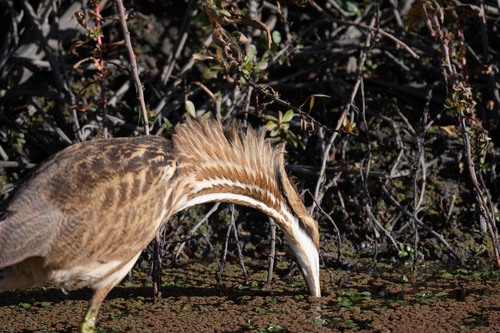 Butor d'Amérique
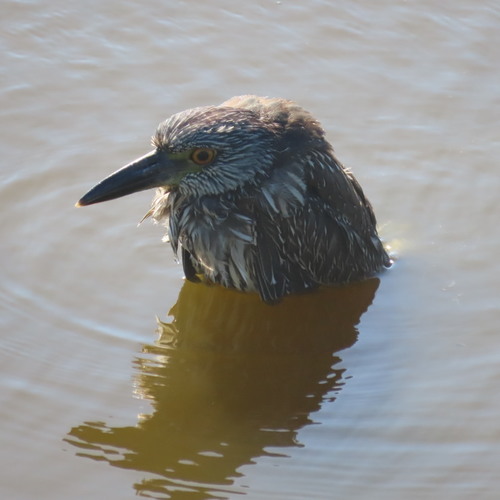 Bihoreau violacé
En bref
Le Butor d'Amérique et le Bihoreau violacé peuvent être distingués par leurs préférences d'habitat et leur plumage. Le Butor d'Amérique est plus cryptique avec un plumage brun strié, tandis que le Bihoreau violacé a des tons gris distinctifs et une couronne blanche.
Conseils d’identification
- Recherchez le plumage brun strié du Butor d'Amérique par rapport à la couronne grise et blanche du Bihoreau violacé.
- Observez le comportement : posture de gel pour le Butor, approche lente pour le Bihoreau.
- Considérez l'habitat : végétation dense des marais pour les Butors, zones humides boisées pour les Bihoreaux.
Plumage
Le Butor d'Amérique a un plumage brun strié qui offre un excellent camouflage parmi les roseaux et les herbes. En revanche, le Bihoreau violacé se caractérise par son plumage gris doux avec une couronne blanche frappante et des taches sur les joues.
Comportement
Le Butor d'Amérique est connu pour son comportement secret et sa tendance à se figer avec son bec pointé vers le haut pour se fondre dans son environnement. Le Bihoreau violacé est plus susceptible d'être vu en train de chasser lentement à la recherche de crustacés, en particulier des crabes.
Habitat
Les Butors d'Amérique se trouvent généralement dans des marais et des zones humides avec une végétation dense. Les Bihoreaux violacés préfèrent les zones humides boisées, les marécages et les bayous, souvent dans des zones à faible luminosité.
Butor d'Amérique · Bihoreau violacé · Mes oiseaux difficiles