Birdr

American Bittern vs Yellow-crowned Night Heron

Botaurus lentiginosus versus Nyctanassa violacea

Play a quiz with American Bittern and Yellow-crowned Night Heron
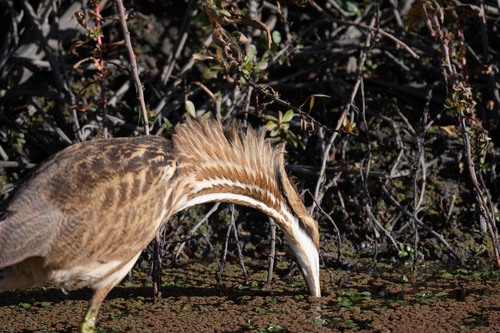
American Bittern (Botaurus lentiginosus) American Bittern
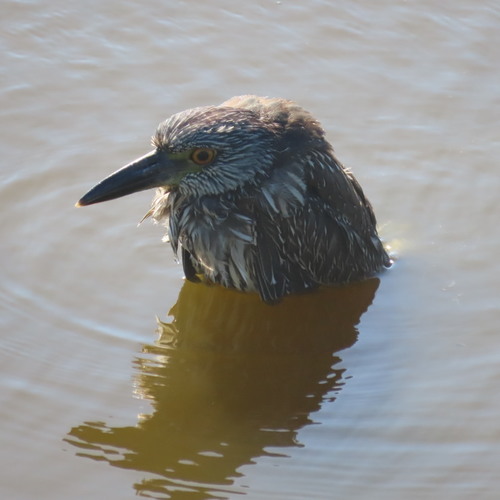
Yellow-crowned Night Heron (Nyctanassa violacea) Yellow-crowned Night Heron

Media

Loading…

In short

The American Bittern and Yellow-crowned Night Heron can be differentiated by their structure and plumage. The American Bittern has a more robust body and a thick neck with distinctive streaking, while the Yellow-crowned Night Heron is more slender with a striking white crown and cheek patches.

Identification tips

Size

Both species are similar in size, but the American Bittern appears bulkier due to its thicker neck and body.

Plumage

The American Bittern has a brown, streaked plumage that provides excellent camouflage in reeds. In contrast, the Yellow-crowned Night Heron has a more contrasting appearance with a gray body, white crown, and cheek patches.

Behaviour

The American Bittern is known for its secretive behavior, often remaining motionless among reeds. The Yellow-crowned Night Heron is more active at dusk and dawn, often seen stalking crustaceans.

Habitat

American Bitterns prefer freshwater marshes with dense vegetation. Yellow-crowned Night Herons are found in forested wetlands, swamps, and coastal areas, often where crabs are abundant.

Voice

The American Bittern has a distinctive 'pump-er-lunk' call, while the Yellow-crowned Night Heron is generally quieter but may give harsh squawks.

Submit a better description

Use the same sections as the comparison. Your text is published immediately.

The American Bittern and Yellow-crowned Night Heron can be differentiated by their structure and plumage. The American Bittern has a more robust body and a thick neck with distinctive streaking, while the Yellow-crowned Night Heron is more slender with a striking white crown and cheek patches.

  • Neck and Body Shape: American Bittern has a thicker neck and body; Yellow-crowned Night Heron is more slender.
  • Plumage: Look for streaked brown plumage in Bitterns versus gray with white patches in Night Herons.
  • Habitat: Bitterns in dense freshwater marshes; Night Herons in forested wetlands and coastal areas.
  • Activity Time: Bitterns are more secretive and stationary; Night Herons are active at dusk and dawn.

Both species are similar in size, but the American Bittern appears bulkier due to its thicker neck and body.

The American Bittern has a brown, streaked plumage that provides excellent camouflage in reeds. In contrast, the Yellow-crowned Night Heron has a more contrasting appearance with a gray body, white crown, and cheek patches.

The American Bittern is known for its secretive behavior, often remaining motionless among reeds. The Yellow-crowned Night Heron is more active at dusk and dawn, often seen stalking crustaceans.

American Bitterns prefer freshwater marshes with dense vegetation. Yellow-crowned Night Herons are found in forested wetlands, swamps, and coastal areas, often where crabs are abundant.

The American Bittern has a distinctive 'pump-er-lunk' call, while the Yellow-crowned Night Heron is generally quieter but may give harsh squawks.

Discard your changes?

You have unsaved edits. If you leave now, those changes will be lost.

American Bittern · Yellow-crowned Night Heron · My Tricky Birds