
Troglodyte à calotte noire vs Troglodyte à poitrine blanche
Cantorchilus nigricapillus contre Henicorhina leucosticta
Faire un quiz avec Troglodyte à calotte noire et Troglodyte à poitrine blanche
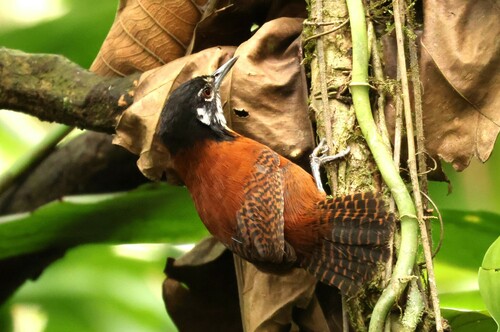 Troglodyte à calotte noire
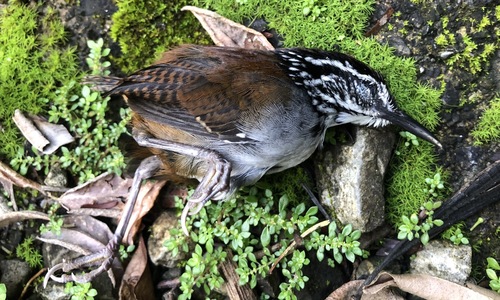 Troglodyte à poitrine blanche
En bref
Le Troglodyte à calotte noire et le Troglodyte à poitrine blanche peuvent être distingués par leur plumage et leurs vocalisations. Le Troglodyte à calotte noire est connu pour son comportement furtif et ses duos antiphonaux, tandis que le Troglodyte à poitrine blanche a des parties inférieures blanches distinctives et un sourcil blanchâtre.
Conseils d’identification
Check plumage: Look for the white underparts and whitish supercilium of the Troglodyte à poitrine blanche. Listen for vocalizations: Les Troglodytes à calotte noire sont connus pour leurs duos. Observe behavior: Les Troglodytes à calotte noire sont furtifs, souvent cachés dans une végétation dense.
Plumage
Le Troglodyte à calotte noire a un plumage plus varié avec différentes sous-espèces, tandis que le Troglodyte à poitrine blanche montre constamment des parties supérieures brun chaud, un sourcil blanchâtre et principalement des parties inférieures blanches qui deviennent rousses ou fauves à l'arrière.
Comportement
Le Troglodyte à calotte noire est un expert en furtivité et participe à des duos antiphonaux. Le comportement du Troglodyte à poitrine blanche n'est pas détaillé dans les notes.
Voix
Le Troglodyte à calotte noire est noté pour ses vocalisations curieuses et ses duos. Les vocalisations du Troglodyte à poitrine blanche ne sont pas détaillées dans les notes.
Troglodyte à calotte noire · Troglodyte à poitrine blanche · Mes oiseaux difficiles