Birdr

Bay Wren vs White-breasted Wood-Wren

Cantorchilus nigricapillus versus Henicorhina leucosticta

Play a quiz with Bay Wren and White-breasted Wood-Wren

Bay Wren (Cantorchilus nigricapillus) Bay Wren
White-breasted Wood-Wren (Henicorhina leucosticta) White-breasted Wood-Wren

Media

Loading…

In short

The Bay Wren and White-breasted Wood-Wren can be distinguished by their plumage and vocalizations. The Bay Wren has a distinctive black cap and a more rufous body, while the White-breasted Wood-Wren features a whitish supercilium and white underparts. Their songs and calls also differ, aiding identification.

Identification tips

Size

Both species are similar in size, typical of small wrens.

Plumage

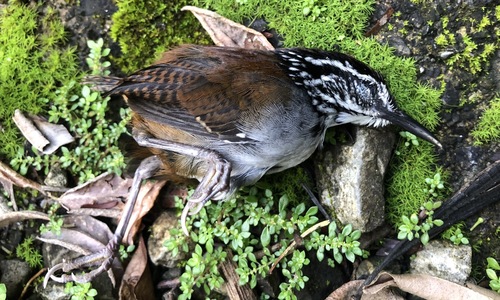
Bay Wren has a black cap and a rufous body, whereas the White-breasted Wood-Wren has warm brown upperparts with a whitish supercilium and white underparts that become rufous or buff posteriorly.

Behaviour

Both species are known for skulking behavior, often staying hidden in dense vegetation.

Habitat

Bay Wren is adaptable to human-modified habitats, while the White-breasted Wood-Wren prefers dense forest undergrowth.

Voice

Bay Wren engages in antiphonal duetting, while the White-breasted Wood-Wren has a distinct song that differs from the Bay Wren.

Submit a better description

Use the same sections as the comparison. Your text is published immediately.

The Bay Wren and White-breasted Wood-Wren can be distinguished by their plumage and vocalizations. The Bay Wren has a distinctive black cap and a more rufous body, while the White-breasted Wood-Wren features a whitish supercilium and white underparts. Their songs and calls also differ, aiding identification.

  • Look for the black cap and rufous body of the Bay Wren.
  • Note the whitish supercilium and white underparts of the White-breasted Wood-Wren.
  • Listen for differences in their vocalizations, especially the duetting of the Bay Wren.
  • Consider habitat: Bay Wrens are more adaptable to disturbed areas.

Both species are similar in size, typical of small wrens.

Bay Wren has a black cap and a rufous body, whereas the White-breasted Wood-Wren has warm brown upperparts with a whitish supercilium and white underparts that become rufous or buff posteriorly.

Both species are known for skulking behavior, often staying hidden in dense vegetation.

Bay Wren is adaptable to human-modified habitats, while the White-breasted Wood-Wren prefers dense forest undergrowth.

Bay Wren engages in antiphonal duetting, while the White-breasted Wood-Wren has a distinct song that differs from the Bay Wren.

Discard your changes?

You have unsaved edits. If you leave now, those changes will be lost.

Bay Wren · White-breasted Wood-Wren · My Tricky Birds