
Alapi à menton noir vs Alapi paludicole
Hypocnemoides melanopogon contre Sclateria naevia
Faire un quiz avec Alapi à menton noir et Alapi paludicole
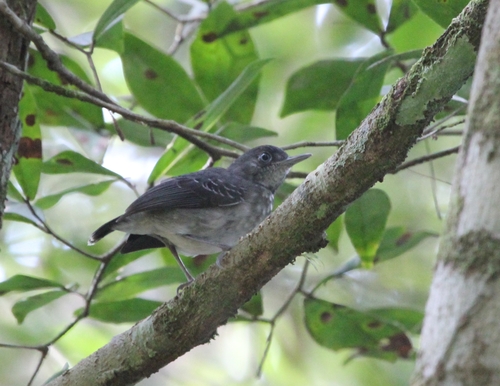 Alapi à menton noir
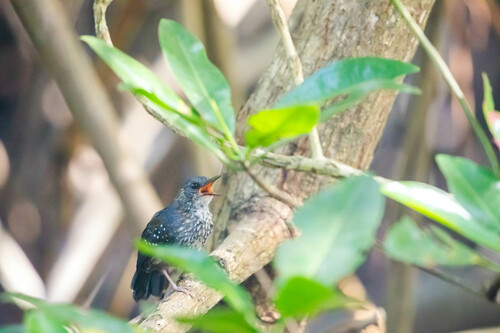 Alapi paludicole
En bref
L'Alapi à menton noir et l'Alapi paludicole peuvent être distingués par la narrower white tip on the tail de l'Alapi à menton noir. Bien que les deux espèces partagent une préférence pour les forêts inondées saisonnièrement, leurs vocalisations sont le moyen le plus fiable de les différencier.
Conseils d’identification
- Look for the narrower white tip on the tail of the Alapi à menton noir.
- Note the presence of small white spots on the wing coverts of the Alapi paludicole.
- Listen for distinct vocalizations to confirm identification.
Plumage
Les deux espèces ont un plumage gris foncé avec des pointes blanches sur les couvertures des ailes, mais l'Alapi à menton noir a une pointe blanche plus étroite sur la queue. L'Alapi paludicole présente jusqu'à trois rangées de petites taches blanches sur les couvertures des ailes et varie en coloration des parties inférieures selon la région.
Comportement
L'Alapi à menton noir se nourrit généralement en paires soudées.
Habitat
Les deux espèces habitent des forêts inondées saisonnièrement, mais l'Alapi paludicole se trouve également dans des habitats de rivières et de bords d'eau ainsi que dans des zones mal drainées au sein de la terra firme, allant jusqu'à 700 m.
Voix
Les vocalisations sont le moyen le plus fiable de différencier ces espèces, bien que les différences spécifiques ne soient pas détaillées ici.
Alapi à menton noir · Alapi paludicole · Mes oiseaux difficiles