
Tétéma coq-de-bois vs Troglodyte à poitrine blanche
Formicarius analis contre Henicorhina leucosticta
Faire un quiz avec Tétéma coq-de-bois et Troglodyte à poitrine blanche
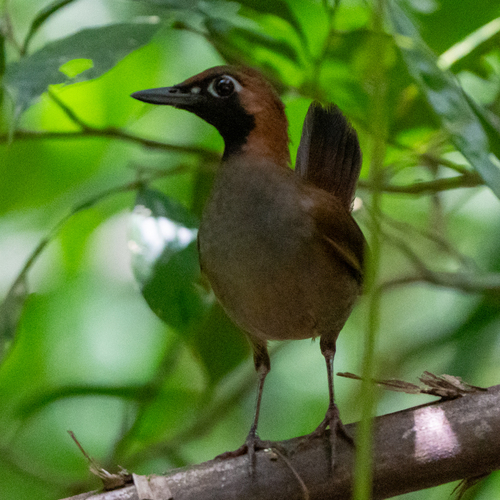 Tétéma coq-de-bois
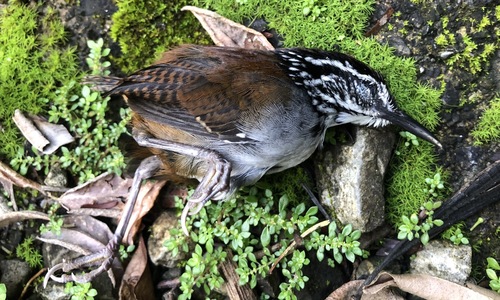 Troglodyte à poitrine blanche
En bref
Le Tétéma coq-de-bois et le Troglodyte à poitrine blanche peuvent être distingués principalement par leur plumage et leur structure. Le Tétéma coq-de-bois a une apparence plus uniforme avec un visage noir distinctif, tandis que le Troglodyte à poitrine blanche présente une poitrine blanche et un supercilium blanchâtre proéminent. Ces espèces ne sont pas étroitement liées, le tétéma étant un oiseau terrestre et le troglodyte étant plus arboricole.
Conseils d’identification
Recherchez le visage noir du Tétéma coq-de-bois et la poitrine blanche et le supercilium blanchâtre du Troglodyte à poitrine blanche. Observez le comportement : les tétémas sont des oiseaux terrestres, tandis que les troglodytes sont plus arboricoles.
Plumage
Le Tétéma coq-de-bois a un visage noir et une coloration généralement uniforme, tandis que le Troglodyte à poitrine blanche affiche des parties supérieures brun chaud avec des barrures plus sombres sur les ailes et la queue, un supercilium blanchâtre, et des parties inférieures principalement blanches qui deviennent rousses ou fauves vers l'arrière.
Comportement
Le Tétéma coq-de-bois se trouve généralement sur le sol de la forêt, marchant ou courant souvent, tandis que le Troglodyte à poitrine blanche est plus arboricole, souvent vu sautant à travers le sous-bois.
Tétéma coq-de-bois · Troglodyte à poitrine blanche · Mes oiseaux difficiles