
Tangara à tête marron vs Tangara à collier gris
Thlypopsis pyrrhocoma contre Microspingus cabanisi
Faire un quiz avec Tangara à tête marron et Tangara à collier gris
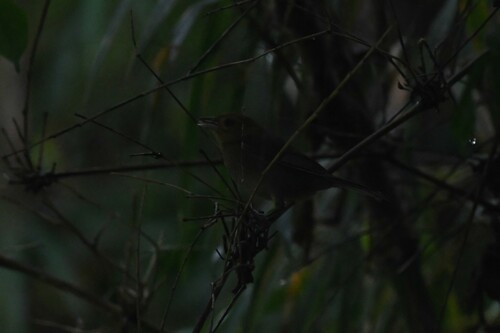 Tangara à tête marron
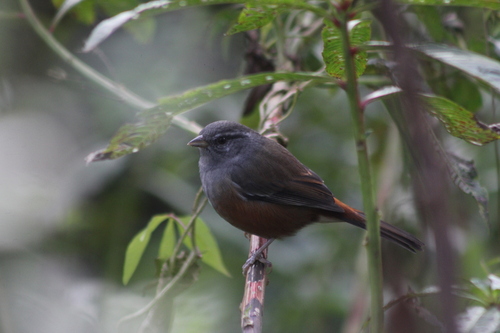 Tangara à collier gris
En bref
Le Tangara à tête marron et la Tangara à collier gris peuvent être distingués principalement par la coloration de leur tête et leur plumage général. Le Tangara à tête marron présente une tête marron profond avec un petit masque noirâtre, tandis que la Tangara à collier gris ne possède pas ces marques distinctes sur la tête. Les deux espèces habitent des régions similaires, mais leur plumage et leur comportement offrent des indices pour l'identification.
Conseils d’identification
Recherchez la tête marron profond et le masque noirâtre chez le mâle Tangara à tête marron. Les femelles ont une coiffe rousse terne. La Tangara à collier gris ne possède pas ces caractéristiques de tête, ce qui constitue un marqueur de terrain fiable. Observez le comportement ; le Tangara à tête marron se trouve souvent près du sol et peut être trouvé dans des zones de bambou.
Plumage
Le mâle Tangara à tête marron a une tête marron profond avec un petit masque noirâtre et est largement grisâtre, tandis que la femelle est de couleur olive avec une coiffe rousse terne. En revanche, la Tangara à collier gris n'a pas la tête marron ni le masque noirâtre, ce qui fait de la coloration de la tête une caractéristique clé de distinction.
Comportement
Le Tangara à tête marron est généralement furtif et reste près du sol, souvent associé à des zones de bambou. Le comportement de la Tangara à collier gris n'est pas détaillé, mais toute différence significative dans le comportement furtif pourrait aider à l'identification.
Tangara à tête marron · Tangara à collier gris · Mes oiseaux difficiles