Birdr

Chestnut-headed Tanager vs Grey-throated Warbling Finch

Thlypopsis pyrrhocoma versus Microspingus cabanisi

Play a quiz with Chestnut-headed Tanager and Grey-throated Warbling Finch
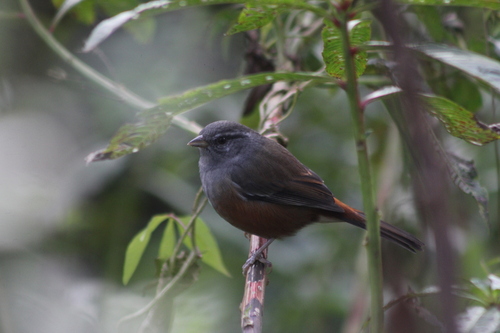
Chestnut-headed Tanager (Thlypopsis pyrrhocoma) Chestnut-headed Tanager
Grey-throated Warbling Finch (Microspingus cabanisi) Grey-throated Warbling Finch

Media

Loading…

In short

The Chestnut-headed Tanager and Grey-throated Warbling Finch can be distinguished by their head coloration and behavior. The Tanager has a distinctive deep chestnut head, while the Finch has a more subdued grey throat and head. Both species belong to the same family, but they exhibit different behaviors and habitat preferences.

Identification tips

Look for the chestnut head of the Tanager, especially in males. Females are less vibrant but often seen with males. The Finch's grey throat and head are key identifiers. Observe behavior: Tanagers are more skulking and ground-oriented.

Size

Both species are similar in size, typical of small tanagers and finches.

Plumage

The Chestnut-headed Tanager male has a deep chestnut head with a small blackish mask, while the female is olive with a dull rufous cap. The Grey-throated Warbling Finch has a grey throat and head, lacking the Tanager's vibrant chestnut coloration.

Behaviour

The Chestnut-headed Tanager is generally skulking and stays close to the ground, often in pairs. The Grey-throated Warbling Finch's behavior is less documented, but it may be less secretive.

Habitat

The Chestnut-headed Tanager is associated with the Atlantic Forest biome and may depend on bamboo patches. The Grey-throated Warbling Finch's habitat preferences are not as well-documented but are likely similar.

Voice

Vocalization details are not well-documented for these species.

Submit a better description

Use the same sections as the comparison. Your text is published immediately.

The Chestnut-headed Tanager and Grey-throated Warbling Finch can be distinguished by their head coloration and behavior. The Tanager has a distinctive deep chestnut head, while the Finch has a more subdued grey throat and head. Both species belong to the same family, but they exhibit different behaviors and habitat preferences.

Look for the chestnut head of the Tanager, especially in males. Females are less vibrant but often seen with males. The Finch's grey throat and head are key identifiers. Observe behavior: Tanagers are more skulking and ground-oriented.

Both species are similar in size, typical of small tanagers and finches.

The Chestnut-headed Tanager male has a deep chestnut head with a small blackish mask, while the female is olive with a dull rufous cap. The Grey-throated Warbling Finch has a grey throat and head, lacking the Tanager's vibrant chestnut coloration.

The Chestnut-headed Tanager is generally skulking and stays close to the ground, often in pairs. The Grey-throated Warbling Finch's behavior is less documented, but it may be less secretive.

The Chestnut-headed Tanager is associated with the Atlantic Forest biome and may depend on bamboo patches. The Grey-throated Warbling Finch's habitat preferences are not as well-documented but are likely similar.

Vocalization details are not well-documented for these species.

Discard your changes?

You have unsaved edits. If you leave now, those changes will be lost.

Chestnut-headed Tanager · Grey-throated Warbling Finch · My Tricky Birds