
Batara fascié vs Batara rayé
Cymbilaimus lineatus contre Thamnophilus doliatus
Faire un quiz avec Batara fascié et Batara rayé
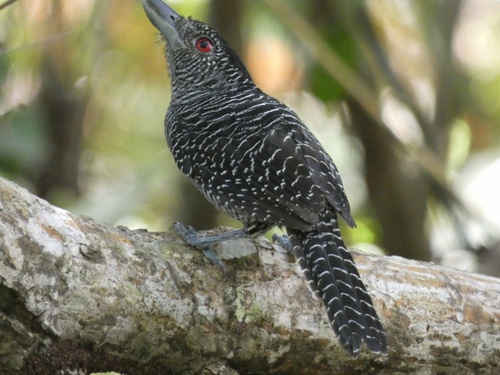 Batara fascié
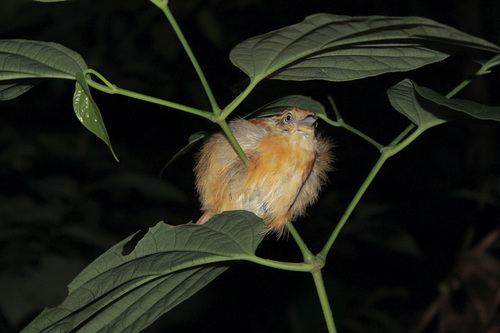 Batara rayé
En bref
Le Batara fascié et le Batara rayé peuvent être distingués par leurs motifs de plumage et la couleur de leurs yeux. Le Batara fascié a des yeux rouges et un plumage barré brun foncé et brun jaunâtre, tandis que le Batara rayé présente des barres noires et blanches alternées sur tout son corps et un grand bec avec un crochet acéré.
Conseils d’identification
- Recherchez des yeux rouges chez le Batara fascié.
- Observez le motif de plumage : le Batara fascié a un plumage barré brun foncé et brun jaunâtre, tandis que le Batara rayé a des barres noires et blanches.
- Vérifiez le plumage supérieur cannelle-roux chez les femelles Batara rayés.
- Notez la vocalisation et l'affichage : les Batara rayés chantent des duos avec des affichages visuels.
Plumage
Le Batara fascié a des yeux rouges et un plumage qui est barré brun foncé et brun jaunâtre. En revanche, le Batara rayé a des barres noires et blanches alternées sur toutes les parties plumées, les mâles ayant parfois une tache blanche semi-cachée près de l'arrière de la couronne. Les femelles Batara rayés ont un plumage supérieur cannelle-roux et une poitrine buff ocre plus claire.
Habitat
Le Batara fascié cherche sa nourriture dans le sous-bois des forêts tropicales de plaine, principalement en dessous de 800 m, et est souvent vu dans des bandes de plusieurs espèces. Les préférences d'habitat du Batara rayé ne sont pas détaillées ici.
Voix
Le Batara rayé est connu pour son chant de 2 à 3 secondes, souvent exécuté en duo par des partenaires reproducteurs, accompagné d'un affichage visuel de mouvements de tête et de queue.