Fasciated Antshrike vs Barred Antshrike
Cymbilaimus lineatus versus Thamnophilus doliatus
Play a quiz with Fasciated Antshrike and Barred Antshrike
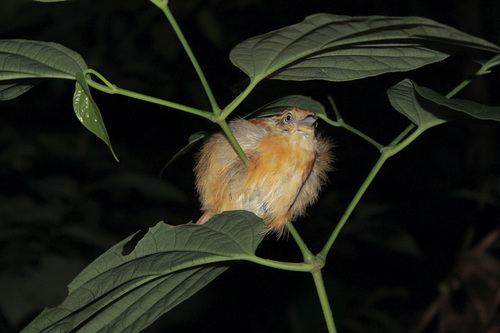
Fasciated Antshrike
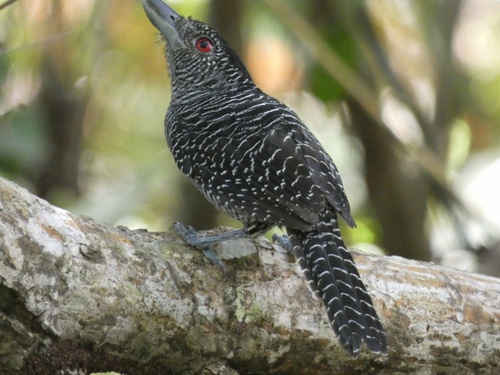
Barred Antshrike
In short
The Fasciated Antshrike and Barred Antshrike can be distinguished by their plumage patterns and habitat preferences. The Fasciated Antshrike has a barred dark brown and yellowish-brown plumage with red eyes, while the Barred Antshrike features alternating black and white bars. Both species have a hooked bill, but their vocalizations and behaviors differ.
Identification tips
- Plumage: Look for the barred pattern; Fasciated Antshrikes have dark brown and yellowish-brown bars, while Barred Antshrikes have black and white bars.
- Eye color: Fasciated Antshrikes have red eyes.
- Behavior: Note the presence in mixed-species flocks for Fasciated Antshrikes and dueting behavior in Barred Antshrikes.
- Habitat: Consider the forest type and elevation; Fasciated Antshrikes prefer lowland forests, while Barred Antshrikes are more versatile in habitat choice.
Size
Both species are similar in size, typical of antbirds, with no significant size difference noted.
Plumage
The Fasciated Antshrike has barred dark brown and yellowish-brown plumage with red eyes and a russet crown in females. The Barred Antshrike displays black and white bars across its body, with males sometimes having a black crown or a white patch, and females showing cinnamon-rufous upperparts.
Behaviour
Fasciated Antshrikes forage in the midstory of forests, often in mixed-species flocks, while Barred Antshrikes are more solitary, forming long-term pair bonds and engaging in head bobbing and tail wagging during duets.
Habitat
Fasciated Antshrikes are found in tropical lowland forests, typically below 800 m but occasionally up to 1600 m. Barred Antshrikes hold year-round territories and are more adaptable, often found in a variety of habitats including secondary growth and gardens.
Voice
Barred Antshrikes produce a 2-3 second song, often in duets, with visual displays. Fasciated Antshrike vocalizations are not detailed in the sources, suggesting less distinctive vocal behavior.