
Outarde canepetière vs Coulicou à bec jaune
Tetrax tetrax contre Coccyzus americanus
Faire un quiz avec Outarde canepetière et Coulicou à bec jaune
 Outarde canepetière
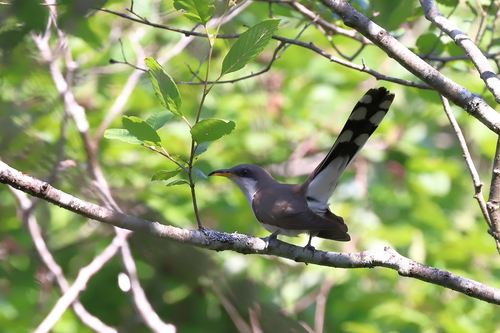 Coulicou à bec jaune
En bref
L'Outarde canepetière et le Coulicou à bec jaune se distinguent facilement par leur taille et la couleur de leur bec. L'Outarde canepetière est un oiseau terrestre avec un corps compact et un cou court et épais, tandis que le Coulicou à bec jaune est plus élancé avec une longue queue et un bec jaune distinctif.
Conseils d’identification
Recherchez le bec jaune du Coulicou à bec jaune comme caractéristique clé de distinction. Notez le comportement terrestre de l'Outarde canepetière par rapport aux habitudes arboricoles du coucou. Les différences de taille et de forme sont également significatives : les Outardes canepetières sont plus robustes, tandis que les Coulicous à bec jaune sont plus élancés avec une longue queue.
Taille
L'Outarde canepetière est plus grande et plus robuste par rapport au Coulicou à bec jaune, qui est plus élancé et allongé.
Plumage
L'Outarde canepetière a un plumage plus uniforme et cryptique, tandis que le Coulicou à bec jaune présente un ventre blanc contrastant et un dessus brun.
Comportement
L'Outarde canepetière est généralement vue marchant sur le sol, tandis que le Coulicou à bec jaune se trouve plus souvent perché dans les arbres ou en vol.
Habitat
Les Outardes canepetières se trouvent dans des prairies ouvertes et des champs agricoles, tandis que les Coulicous à bec jaune préfèrent les zones boisées et les lisières de forêt.
Outarde canepetière · Coulicou à bec jaune · Mes oiseaux difficiles