Birdr

Grimpar à bec étroit vs Plain Xenops

Lepidocolaptes angustirostris contre Xenops minutus

Faire un quiz avec Grimpar à bec étroit et Plain Xenops
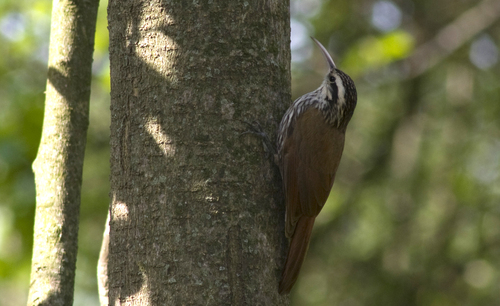
Grimpar à bec étroit (Lepidocolaptes angustirostris) Grimpar à bec étroit
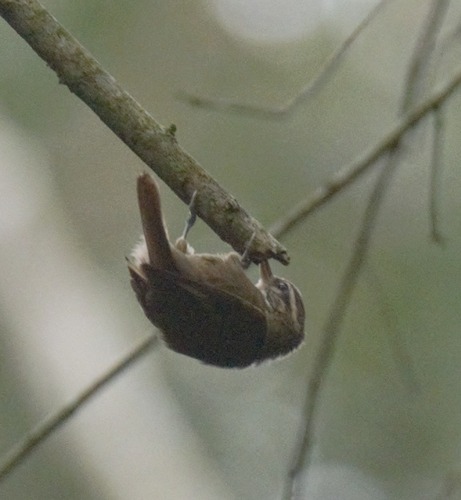
Plain Xenops (Xenops minutus) Plain Xenops

Médias

Chargement…

En bref

La forme du bec est le critère de terrain le plus fiable pour distinguer ces deux espèces : le Grimpar à bec étroit a un long bec mince, tandis que le Plain Xenops a un bec court et trapu. Les deux espèces sont petites, mais leurs différences structurelles sont essentielles pour l'identification.

Conseils d’identification

  1. Forme du bec : Recherchez le long bec mince du Grimpar à bec étroit par rapport au bec court et trapu du Plain Xenops. 2. Structure générale : Notez l'apparence plus allongée du Grimpar à bec étroit par rapport à la forme plus compacte du Plain Xenops.

Envoyer une meilleure description

Utilise les mêmes sections que la comparaison. Ton texte est publié tout de suite.

The bill shape is the most reliable field mark to distinguish between these two species: the Narrow-billed Woodcreeper has a long, slender bill, while the Plain Xenops has a short, stubby bill. Both species are small, but their structural differences are key in identification.

  1. Bill shape: Look for the long, slender bill of the Narrow-billed Woodcreeper compared to the short, stubby bill of the Plain Xenops. 2. Overall structure: Note the more elongated appearance of the Narrow-billed Woodcreeper versus the more compact form of the Plain Xenops.

Abandonner tes modifications ?

Tu as des modifications non enregistrées. Si tu pars maintenant, elles seront perdues.

Grimpar à bec étroit · Plain Xenops · Mes oiseaux difficiles