Birdr

Narrow-billed Woodcreeper vs Plain Xenops

Lepidocolaptes angustirostris versus Xenops minutus

Play a quiz with Narrow-billed Woodcreeper and Plain Xenops
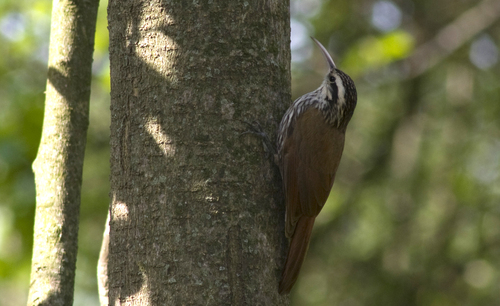
Narrow-billed Woodcreeper (Lepidocolaptes angustirostris) Narrow-billed Woodcreeper
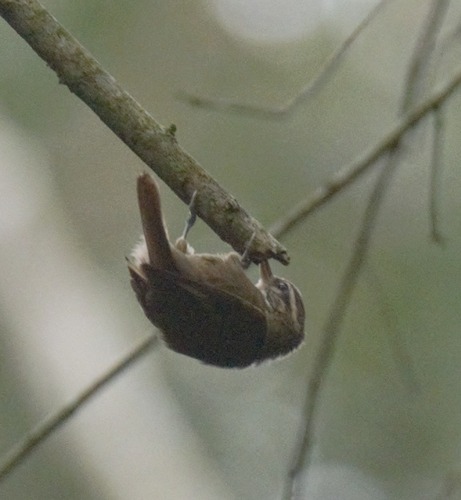
Plain Xenops (Xenops minutus) Plain Xenops

Media

Loading…

In short

The Narrow-billed Woodcreeper and Plain Xenops are both small, brown woodcreepers, but they can be distinguished by their bill shape and behavior. The Narrow-billed Woodcreeper has a longer, more slender bill, while the Plain Xenops has a shorter, stubby bill. Observing their foraging behavior can also help, as the Xenops often hangs upside down.

Identification tips

  1. Look for the bill shape: long and slender in the Narrow-billed Woodcreeper, short and stubby in the Plain Xenops. 2. Observe foraging behavior: Xenops often hangs upside down. 3. Note the plumage: streaked head in the Woodcreeper versus more uniform brown in the Xenops. 4. Consider the habitat: Woodcreeper in open woodlands, Xenops in dense forests.

Size

Both species are small, but the Narrow-billed Woodcreeper is slightly larger and more elongated compared to the more compact Plain Xenops.

Plumage

The Narrow-billed Woodcreeper has a streaked head and back, while the Plain Xenops is more uniformly brown with a slightly rufous tinge on the wings and tail.

Behaviour

The Plain Xenops often forages by creeping along branches and hanging upside down, while the Narrow-billed Woodcreeper tends to move more vertically along tree trunks.

Habitat

Both species inhabit forests, but the Narrow-billed Woodcreeper is more often found in open woodlands and edges, whereas the Plain Xenops prefers denser forest interiors.

Voice

The vocalizations of these species differ, but specific descriptions are not provided. Listening for distinct calls may aid identification.

Submit a better description

Use the same sections as the comparison. Your text is published immediately.

The Narrow-billed Woodcreeper and Plain Xenops are both small, brown woodcreepers, but they can be distinguished by their bill shape and behavior. The Narrow-billed Woodcreeper has a longer, more slender bill, while the Plain Xenops has a shorter, stubby bill. Observing their foraging behavior can also help, as the Xenops often hangs upside down.

  1. Look for the bill shape: long and slender in the Narrow-billed Woodcreeper, short and stubby in the Plain Xenops. 2. Observe foraging behavior: Xenops often hangs upside down. 3. Note the plumage: streaked head in the Woodcreeper versus more uniform brown in the Xenops. 4. Consider the habitat: Woodcreeper in open woodlands, Xenops in dense forests.

Both species are small, but the Narrow-billed Woodcreeper is slightly larger and more elongated compared to the more compact Plain Xenops.

The Narrow-billed Woodcreeper has a streaked head and back, while the Plain Xenops is more uniformly brown with a slightly rufous tinge on the wings and tail.

The Plain Xenops often forages by creeping along branches and hanging upside down, while the Narrow-billed Woodcreeper tends to move more vertically along tree trunks.

Both species inhabit forests, but the Narrow-billed Woodcreeper is more often found in open woodlands and edges, whereas the Plain Xenops prefers denser forest interiors.

The vocalizations of these species differ, but specific descriptions are not provided. Listening for distinct calls may aid identification.

Discard your changes?

You have unsaved edits. If you leave now, those changes will be lost.

Narrow-billed Woodcreeper · Plain Xenops · My Tricky Birds