
Canard souchet vs Canard colvert
Spatula clypeata contre Anas platyrhynchos
Faire un quiz avec Canard souchet et Canard colvert
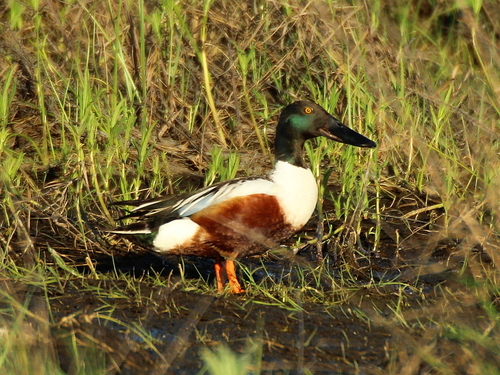 Canard souchet
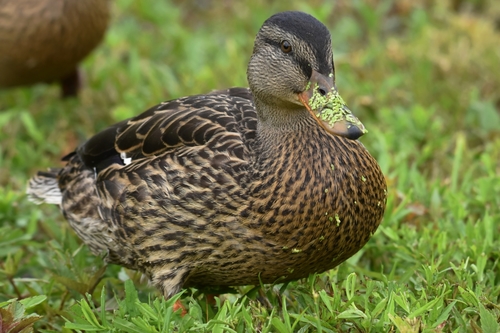 Canard colvert
En bref
Le marque de terrain le plus fiable pour distinguer un Canard souchet d'un Canard colvert est la forme du bec. Le Canard souchet a un bec distinctif, large et en forme de spatule, tandis que le Canard colvert a un bec de canard plus typique. Les deux espèces peuvent être trouvées dans des habitats similaires, mais leur comportement et leurs vocalisations peuvent également aider à l'identification.
Conseils d’identification
- Recherchez le bec large et en forme de spatule du Canard souchet. 2. Notez les différences de plumage : les mâles Canards souchets ont une tête verte et des côtés rouillés, tandis que les mâles Canards colverts ont une tête verte et un corps gris. 3. Observez le comportement alimentaire : les Canards souchets effleurent la surface de l'eau, contrairement aux Canards colverts qui plongent.
Plumage
Les Canards souchets ont un plumage frappant avec des mâles affichant une tête verte, une poitrine blanche et des côtés rouillés, tandis que les mâles Canards colverts ont une tête verte, un corps gris et un anneau blanc autour du cou. Les femelles Canards souchets sont brun tacheté avec une tache bleue sur l'aile, tandis que les femelles Canards colverts sont également brun tacheté mais n'ont pas la tache bleue sur l'aile.
Comportement
Les Canards souchets se nourrissent souvent en effleurant la surface de l'eau avec leur bec, un comportement moins courant chez les Canards colverts, qui plongent plus fréquemment.