Birdr

Northern Shoveler vs Mallard

Spatula clypeata versus Anas platyrhynchos

Play a quiz with Northern Shoveler and Mallard
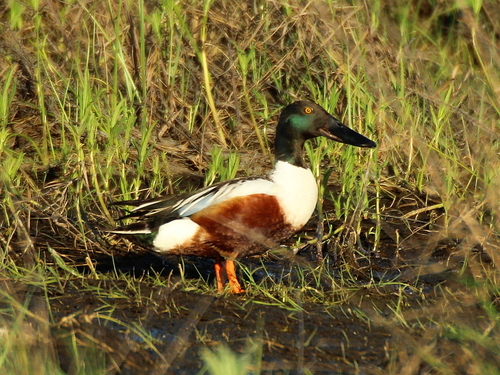
Northern Shoveler (Spatula clypeata) Northern Shoveler
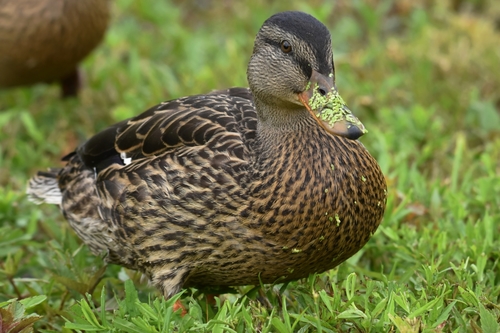
Mallard (Anas platyrhynchos) Mallard

Media

Loading…

In short

The bill shape is the most reliable field mark: Northern Shovelers have a distinctive, large, spatula-shaped bill, while Mallards have a more typical duck bill. Both species are dabbling ducks, but their plumage and behavior offer additional clues for identification.

Identification tips

Size

Both species are similar in size, but the Northern Shoveler may appear slightly smaller and more compact compared to the larger and bulkier Mallard.

Plumage

Male Northern Shovelers have a striking green head, white chest, and rusty sides, while male Mallards have a green head, gray body, and chestnut-brown chest. Female Northern Shovelers and Mallards are more similar, both being mottled brown, but the Shoveler's bill remains a key differentiator.

Behaviour

Northern Shovelers are more territorial and often seen filtering water with their bills, whereas Mallards are more generalist in their feeding habits and can be found in a wider range of habitats.

Habitat

Northern Shovelers prefer shallow wetlands and are more likely found in prairie potholes and saline wetlands, while Mallards are highly adaptable, found in marshes, farmlands, urban parks, and anywhere with open water.

Voice

Both species have similar quacking calls, but vocalization is not a primary distinguishing feature.

Submit a better description

Use the same sections as the comparison. Your text is published immediately.

The bill shape is the most reliable field mark: Northern Shovelers have a distinctive, large, spatula-shaped bill, while Mallards have a more typical duck bill. Both species are dabbling ducks, but their plumage and behavior offer additional clues for identification.

  • Look for the large, spatula-shaped bill of the Northern Shoveler.
  • Observe the plumage: Male Northern Shovelers have a white chest and rusty sides, while male Mallards have a gray body and chestnut-brown chest.
  • Note the habitat: Northern Shovelers are often in shallow wetlands, while Mallards are more widespread.
  • Watch for feeding behavior: Shovelers often filter-feed by sweeping their bills side to side.

Both species are similar in size, but the Northern Shoveler may appear slightly smaller and more compact compared to the larger and bulkier Mallard.

Male Northern Shovelers have a striking green head, white chest, and rusty sides, while male Mallards have a green head, gray body, and chestnut-brown chest. Female Northern Shovelers and Mallards are more similar, both being mottled brown, but the Shoveler's bill remains a key differentiator.

Northern Shovelers are more territorial and often seen filtering water with their bills, whereas Mallards are more generalist in their feeding habits and can be found in a wider range of habitats.

Northern Shovelers prefer shallow wetlands and are more likely found in prairie potholes and saline wetlands, while Mallards are highly adaptable, found in marshes, farmlands, urban parks, and anywhere with open water.

Both species have similar quacking calls, but vocalization is not a primary distinguishing feature.

Discard your changes?

You have unsaved edits. If you leave now, those changes will be lost.

Northern Shoveler · Mallard · My Tricky Birds