
Plongeon catmarin vs Plongeon à bec blanc
Gavia stellata contre Gavia adamsii
Faire un quiz avec Plongeon catmarin et Plongeon à bec blanc
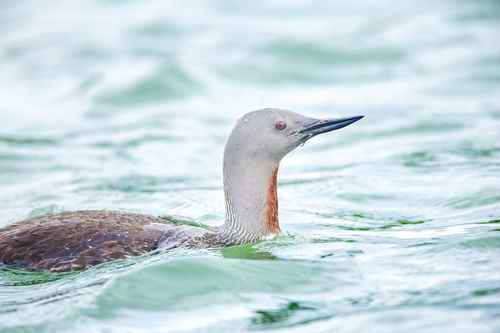 Plongeon catmarin
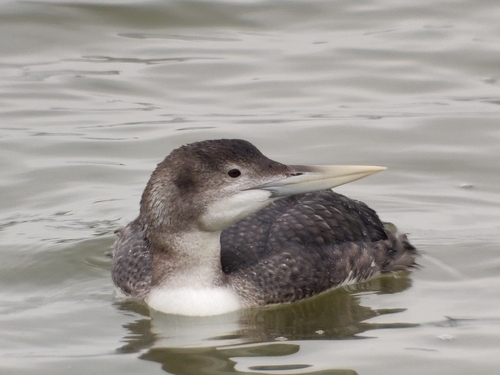 Plongeon à bec blanc
En bref
Le Plongeon catmarin se distingue par sa taille plus petite et son plumage gris relativement simple avec une tache rouge distinctive sur la gorge, tandis que le Plongeon à bec blanc est plus grand et possède un bec jaune proéminent. Les deux espèces se reproduisent dans les régions nordiques, mais elles diffèrent dans leurs comportements de recherche de nourriture et territoriaux.
Conseils d’identification
Vérifiez le bec : Le Plongeon catmarin a un bec plus petit et moins proéminent comparé au bec jaune du Plongeon à bec blanc. Recherchez la tache rouge sur la gorge : C'est une caractéristique clé du Plongeon catmarin pendant la saison de reproduction. Observez la taille : Le Plongeon catmarin est nettement plus petit.
Taille
Le Plongeon catmarin est le plus petit membre de la famille des Gaviidae, tandis que le Plongeon à bec blanc est plus grand.
Plumage
Le Plongeon catmarin a un plumage gris relativement simple avec une tache rouge sur la gorge pendant la saison de reproduction. Le Plongeon à bec blanc, en revanche, a une apparence plus robuste avec un bec jaune proéminent.
Comportement
Le Plongeon catmarin est un chercheur de nourriture central, volant entre les zones de reproduction et de recherche de nourriture, et ne se nourrit pas dans son lac de reproduction. Le Plongeon à bec blanc est fortement territorial, défendant son lac et se nourrissant dans les eaux environnantes.
Habitat
Les deux espèces se reproduisent dans les régions nordiques, mais le Plongeon catmarin utilise souvent de petits lacs arctiques et boréaux, tandis que le Plongeon à bec blanc occupe des lacs et des rivières à courant lent dans des régions de toundra basse.
Voix
Le cri du Plongeon catmarin pendant la reproduction est décrit comme cacophonique, tandis que les détails spécifiques de vocalisation pour le Plongeon à bec blanc ne sont pas fournis.
Plongeon catmarin · Plongeon à bec blanc · Mes oiseaux difficiles