
Conopophage roux vs Grallaire de Natterer
Conopophaga lineata contre Cryptopezus nattereri
Faire un quiz avec Conopophage roux et Grallaire de Natterer
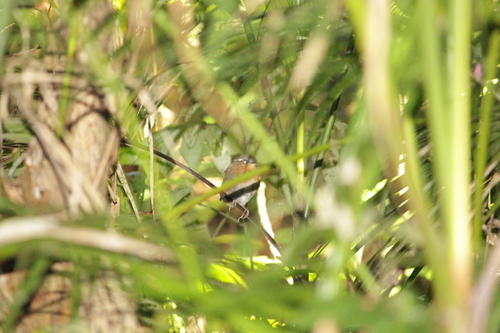 Conopophage roux
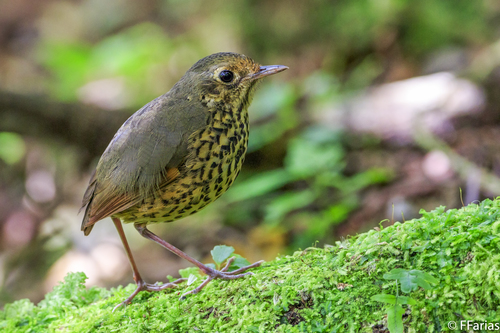 Grallaire de Natterer
En bref
Le Conopophage roux et la Grallaire de Natterer sont tous deux des oiseaux terrestres, mais ils peuvent être distingués par leur plumage et leurs préférences d'habitat. Le Conopophage roux a une gorge et une poitrine fauves avec un ventre blanc, tandis que la Grallaire de Natterer manque d'informations détaillées sur le plumage ici. Ils occupent des habitats différents, le Conopophage roux se trouvant dans des forêts humides et galeries et la Grallaire de Natterer dans des environnements plus xeriques.
Conseils d’identification
Recherchez la gorge fauve et le ventre blanc du Conopophage roux, surtout dans les sous-bois des forêts humides. Considérez l'habitat : Conopophage roux dans les forêts humides vs. Grallaire de Natterer dans des zones plus sèches.
Plumage
Le Conopophage roux a un plumage brun terne sur le dessus, une gorge, une poitrine et des flancs fauves, et un ventre blanc. Les détails du plumage de la Grallaire de Natterer ne sont pas fournis, mais il est historiquement noté comme distinct des espèces similaires.
Comportement
Les deux espèces cherchent des insectes sur ou près du sol.
Habitat
Le Conopophage roux se trouve dans le sous-bois des forêts humides et galeries dans le sud-est du Brésil, l'est du Paraguay et le nord-est de l'Argentine, s'étendant dans des forêts plus sèches dans le centre-sud du Brésil. La Grallaire de Natterer préfère des environnements plus xeriques.
Conopophage roux · Grallaire de Natterer · Mes oiseaux difficiles