Birdr

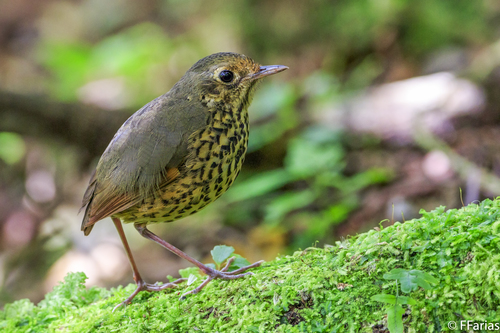
chupa-dente vs pinto-do-mato

Conopophaga lineata versus Cryptopezus nattereri

Jogue um quiz com chupa-dente e pinto-do-mato
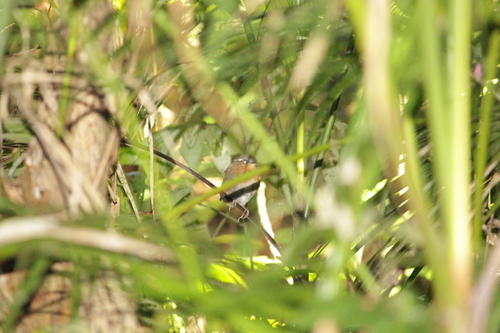
chupa-dente (Conopophaga lineata) chupa-dente
pinto-do-mato (Cryptopezus nattereri) pinto-do-mato

Mídia

Carregando…

Em resumo

O chupa-dente e o pinto-do-mato são ambos pássaros que habitam o solo, mas podem ser distinguidos por sua plumagem e preferências de habitat. O chupa-dente tem uma garganta e peito alaranjados com uma barriga branca, enquanto o pinto-do-mato não possui informações detalhadas sobre plumagem aqui. Eles ocupam habitats diferentes, com o chupa-dente encontrado em florestas úmidas e de galeria e o pinto-do-mato em ambientes mais xerófitos.

Dicas de identificação

Procure pela garganta alaranjada e barriga branca do chupa-dente, especialmente em sub-bosques de florestas úmidas. Considere o habitat: chupa-dente em florestas úmidas vs. pinto-do-mato em áreas mais secas.

Plumagem

O chupa-dente tem partes superiores marrons opacas, uma garganta alaranjada, peito e flancos, e uma barriga branca. Os detalhes da plumagem do pinto-do-mato não são fornecidos, mas é historicamente notado como distinto de espécies semelhantes.

Comportamento

Ambas as espécies forrageiam por insetos no solo ou nas proximidades.

Habitat

O chupa-dente é encontrado no sub-bosque de florestas úmidas e de galeria no sudeste do Brasil, leste do Paraguai e nordeste da Argentina, estendendo-se para florestas mais secas no centro-sul do Brasil. O pinto-do-mato prefere ambientes mais xerófitos.

Enviar uma descrição melhor

Use as mesmas seções da comparação. Seu texto é publicado na hora.

The Rufous Gnateater and Speckle-breasted Antpitta are both ground-dwelling birds, but they can be distinguished by their plumage and habitat preferences. The Rufous Gnateater has a tawny throat and breast with a white belly, while the Speckle-breasted Antpitta lacks detailed plumage information here. They occupy different habitats, with the Rufous Gnateater found in humid and gallery forests and the Speckle-breasted Antpitta in more xeric environments.

Look for the tawny throat and white belly of the Rufous Gnateater, especially in humid forest understories. Consider habitat: Rufous Gnateater in humid forests vs. Speckle-breasted Antpitta in drier areas.

The Rufous Gnateater has dull brown upperparts, a tawny throat, breast, and flanks, and a white belly. The Speckle-breasted Antpitta's plumage details are not provided, but it is historically noted as distinct from similar species.

Both species forage for insects on or near the ground.

Rufous Gnateater is found in the understory of humid and gallery forests in southeastern Brazil, eastern Paraguay, and northeastern Argentina, extending into drier forests in south central Brazil. The Speckle-breasted Antpitta prefers more xeric environments.

Descartar as alterações?

Você tem edições não salvas. Se sair agora, elas serão perdidas.

chupa-dente · pinto-do-mato · Minhas aves difíceis