
Vacher luisant vs Vacher géant
Molothrus bonariensis contre Molothrus oryzivorus
Faire un quiz avec Vacher luisant et Vacher géant
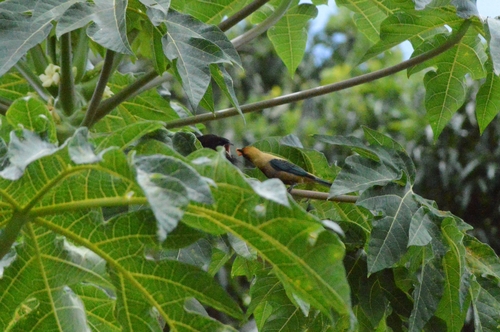 Vacher luisant
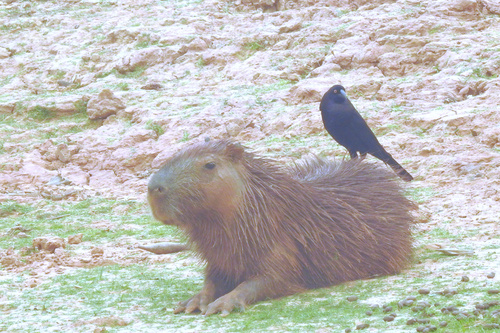 Vacher géant
En bref
Le Vacher luisant et le Vacher géant peuvent être distingués principalement par leur taille, le Vacher géant étant significativement plus grand. Les deux espèces partagent des habitats similaires mais diffèrent par leur comportement alimentaire et leurs préférences d'hôtes.
Conseils d’identification
- Taille : Le Vacher géant est significativement plus grand que le Vacher luisant. 2. Comportement alimentaire : Observez si l'oiseau se nourrit au sol ou plus haut, éventuellement sur du bétail, ce qui est plus typique du Vacher luisant.
Taille
Le Vacher géant est notablement plus grand que le Vacher luisant.
Comportement
Les Vachers luisants sont plus insectivores et se nourrissent souvent plus haut du sol, parfois en se tenant sur le dos des bovins. Ce sont des parasites de couvée opportunistes, ciblant fréquemment les hôtes nichant dans les marais et les cavités. Les Vachers géants sont également des parasites de couvée mais les notes ne précisent pas leur comportement alimentaire.
Habitat
Les deux espèces sont associées à des zones ouvertes et perturbées telles que les régions agricoles.