Birdr

chupim vs iraúna-grande

Molothrus bonariensis versus Molothrus oryzivorus

Jogue um quiz com chupim e iraúna-grande
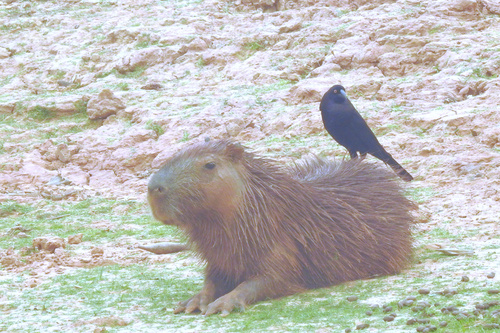
chupim (Molothrus bonariensis) chupim
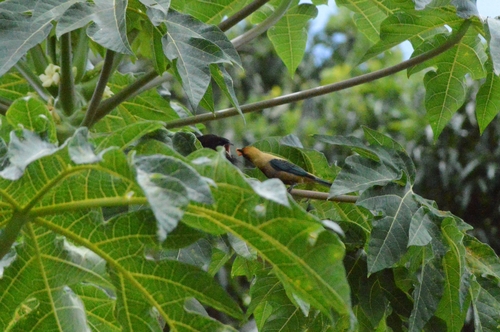
iraúna-grande (Molothrus oryzivorus) iraúna-grande

Mídia

Carregando…

Em resumo

O chupim e a iraúna-grande podem ser distinguidos principalmente pelo tamanho, com a iraúna-grande sendo significativamente maior. Ambas as espécies compartilham habitats semelhantes, mas diferem em seu comportamento alimentar e preferências de hospedeiros.

Dicas de identificação

  1. Tamanho: A iraúna-grande é significativamente maior que o chupim. 2. Comportamento Alimentar: Observe se o pássaro está se alimentando no chão ou mais alto, possivelmente em gado, o que é mais típico do chupim.

Tamanho

A iraúna-grande é notavelmente maior que o chupim.

Comportamento

Os chupins são mais insetívoros e frequentemente se alimentam mais alto do chão, às vezes montando nas costas do gado. Eles são parasitas de ninho oportunistas, frequentemente visando hospedeiros que nidificam em pântanos e em cavidades. As iraúnas-grandes também são parasitas de ninho, mas as notas não especificam seu comportamento alimentar.

Habitat

Ambas as espécies estão associadas a áreas abertas e perturbadas, como regiões agrícolas.

Enviar uma descrição melhor

Use as mesmas seções da comparação. Seu texto é publicado na hora.

The Shiny Cowbird and Giant Cowbird can be distinguished primarily by size, with the Giant Cowbird being significantly larger. Both species share similar habitats but differ in their feeding behavior and host preferences.

  1. Size: The Giant Cowbird is significantly larger than the Shiny Cowbird. 2. Feeding Behavior: Observe if the bird is feeding on the ground or higher up, possibly on livestock, which is more typical of the Shiny Cowbird.

The Giant Cowbird is notably larger than the Shiny Cowbird.

Shiny Cowbirds are more insectivorous and often feed higher off the ground, sometimes riding on the backs of cattle. They are opportunistic brood parasites, frequently targeting marsh-nesting and cavity-nesting hosts. Giant Cowbirds are also brood parasites but the notes do not specify their feeding behavior.

Both species are associated with open, disturbed areas such as agricultural regions.

Descartar as alterações?

Você tem edições não salvas. Se sair agora, elas serão perdidas.

chupim · iraúna-grande · Minhas aves difíceis