
Mésange bicolore vs Plectrophane lapon
Baeolophus bicolor contre Calcarius lapponicus
Faire un quiz avec Mésange bicolore et Plectrophane lapon
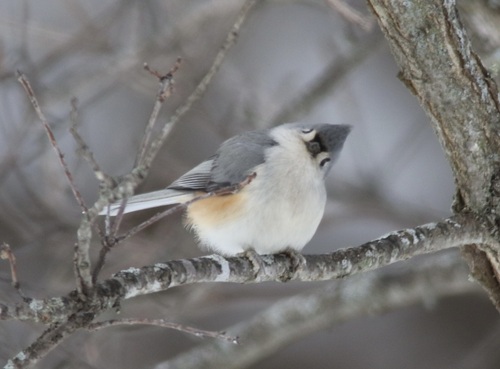 Mésange bicolore
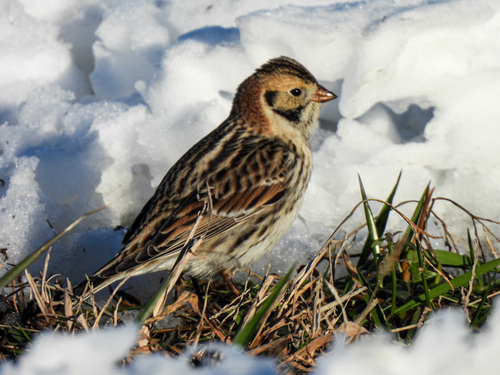 Plectrophane lapon
En bref
La Mésange bicolore et le Plectrophane lapon se distinguent facilement par leur habitat et leur apparence. La Mésange bicolore est un petit oiseau à crête que l'on trouve souvent dans les zones boisées, tandis que le Plectrophane lapon est un oiseau terrestre des toundras ouvertes et des champs. Leur plumage et leur comportement sont distincts, ce qui rend peu probable leur confusion sur le terrain.
Conseils d’identification
Recherchez la crête sur la Mésange bicolore et sa préférence pour les habitats boisés. Le plumage strié du Plectrophane lapon et son comportement terrestre sont des identifiants clés, ainsi que sa présence dans les zones ouvertes.
Plumage
La Mésange bicolore a une crête grise distinctive et un corps principalement gris avec un ventre blanc et des flancs rouillés. En revanche, le Plectrophane lapon n'a pas de crête et présente un plumage plus complexe avec des motifs striés bruns et noirs, particulièrement visibles chez les mâles pendant la saison de reproduction.
Comportement
Les Mésanges bicolores sont souvent vues dans les arbres, cherchant activement de la nourriture et visitant parfois des mangeoires. Les Plectrophanes lapons sont des chercheurs de nourriture au sol, souvent vus en groupes, surtout pendant la migration.
Habitat
Les Mésanges bicolores habitent des zones boisées et des jardins suburbains, tandis que les Plectrophanes lapons se trouvent dans des toundras ouvertes et des champs, en particulier dans les régions nordiques pendant la saison de reproduction.
Mésange bicolore · Plectrophane lapon · Mes oiseaux difficiles