
Hypolaïs d'Upcher vs Rousserolle à grand bec
Hippolais languida contre Acrocephalus orinus
Faire un quiz avec Hypolaïs d'Upcher et Rousserolle à grand bec
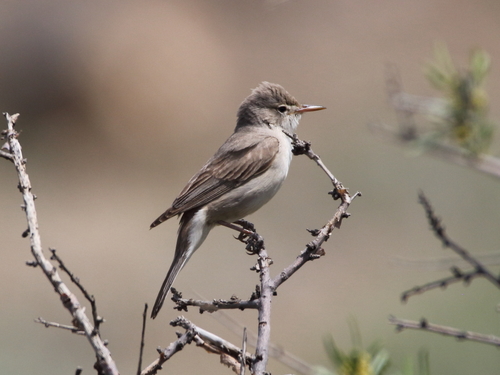 Hypolaïs d'Upcher
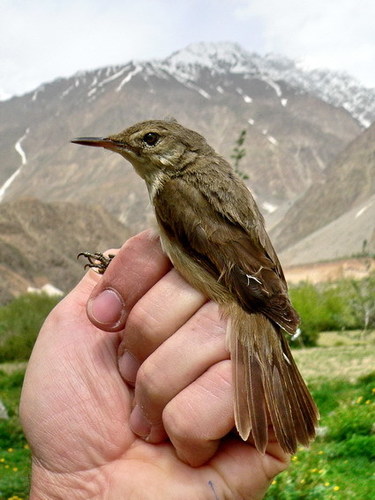 Rousserolle à grand bec
En bref
Le marqueur de terrain le plus fiable pour différencier l'Hypolaïs d'Upcher de la Rousserolle à grand bec est la taille et la forme du bec ; l'Hypolaïs d'Upcher a un bec plus élancé par rapport au bec distinctement plus grand et plus épais de la Rousserolle à grand bec. De plus, leurs habitats préférés diffèrent, l'Hypolaïs d'Upcher favorisant des zones plus ouvertes et sèches, tandis que la Rousserolle à grand bec se trouve généralement dans des roselières denses.
Conseils d’identification
- Taille et forme du bec : L'Hypolaïs d'Upcher a un bec élancé, tandis que la Rousserolle à grand bec a un bec plus grand et plus épais.
- Préférence d'habitat : Cherchez l'Hypolaïs d'Upcher dans des zones ouvertes et sèches et la Rousserolle à grand bec dans des roselières denses.
Habitat
L'Hypolaïs d'Upcher se trouve généralement dans des zones ouvertes et sèches, tandis que la Rousserolle à grand bec préfère les roselières denses.
Hypolaïs d'Upcher · Rousserolle à grand bec · Mes oiseaux difficiles