Birdr

Upcher's Warbler vs Large-billed Reed Warbler

Hippolais languida versus Acrocephalus orinus

Play a quiz with Upcher's Warbler and Large-billed Reed Warbler
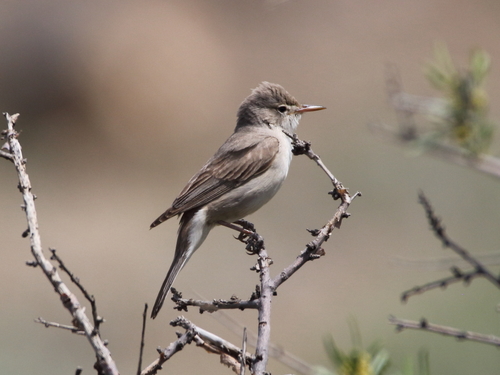
Upcher's Warbler (Hippolais languida) Upcher's Warbler
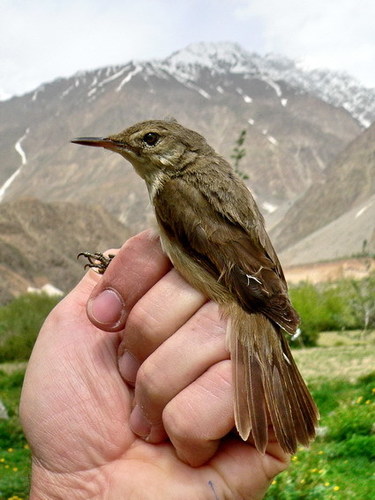
Large-billed Reed Warbler (Acrocephalus orinus) Large-billed Reed Warbler

Media

Loading…

In short

Upcher's Warbler and Large-billed Reed Warbler are both small, similar-looking warblers, but the bill size and shape are key differentiators. Upcher's Warbler has a relatively long, slender bill, while the Large-billed Reed Warbler features a noticeably larger and broader bill.

Identification tips

  1. Bill Size and Shape: Look for the larger, broader bill of the Large-billed Reed Warbler. 2. Tail Flicking: Observe tail movements; Upcher's Warbler often flicks its tail sideways. 3. Habitat: Consider the habitat; Upcher's Warbler in dry, open areas versus Large-billed Reed Warbler in reed beds. 4. Vocalizations: Listen for differences in song when possible.

Size

Both species are similar in size, but the Large-billed Reed Warbler may appear bulkier due to its larger bill.

Plumage

Both species have generally drab plumage with greyish-brown upperparts and paler underparts. Upcher's Warbler may have a slightly warmer tone, but this is not a reliable field mark.

Behaviour

Upcher's Warbler often flicks its tail sideways, a behavior less commonly seen in the Large-billed Reed Warbler.

Habitat

Upcher's Warbler is typically found in dry, open woodlands and scrub, while the Large-billed Reed Warbler prefers dense reed beds and wetland areas.

Voice

The song of Upcher's Warbler is a series of scratchy notes, whereas the Large-billed Reed Warbler's song is less well known but generally includes a series of repetitive phrases.

Submit a better description

Use the same sections as the comparison. Your text is published immediately.

Upcher's Warbler and Large-billed Reed Warbler are both small, similar-looking warblers, but the bill size and shape are key differentiators. Upcher's Warbler has a relatively long, slender bill, while the Large-billed Reed Warbler features a noticeably larger and broader bill.

  1. Bill Size and Shape: Look for the larger, broader bill of the Large-billed Reed Warbler. 2. Tail Flicking: Observe tail movements; Upcher's Warbler often flicks its tail sideways. 3. Habitat: Consider the habitat; Upcher's Warbler in dry, open areas versus Large-billed Reed Warbler in reed beds. 4. Vocalizations: Listen for differences in song when possible.

Both species are similar in size, but the Large-billed Reed Warbler may appear bulkier due to its larger bill.

Both species have generally drab plumage with greyish-brown upperparts and paler underparts. Upcher's Warbler may have a slightly warmer tone, but this is not a reliable field mark.

Upcher's Warbler often flicks its tail sideways, a behavior less commonly seen in the Large-billed Reed Warbler.

Upcher's Warbler is typically found in dry, open woodlands and scrub, while the Large-billed Reed Warbler prefers dense reed beds and wetland areas.

The song of Upcher's Warbler is a series of scratchy notes, whereas the Large-billed Reed Warbler's song is less well known but generally includes a series of repetitive phrases.

Discard your changes?

You have unsaved edits. If you leave now, those changes will be lost.

Upcher's Warbler · Large-billed Reed Warbler · My Tricky Birds