
Tangara unifascié vs Tangara coiffe-noire
Neothraupis fasciata contre Nemosia pileata
Faire un quiz avec Tangara unifascié et Tangara coiffe-noire
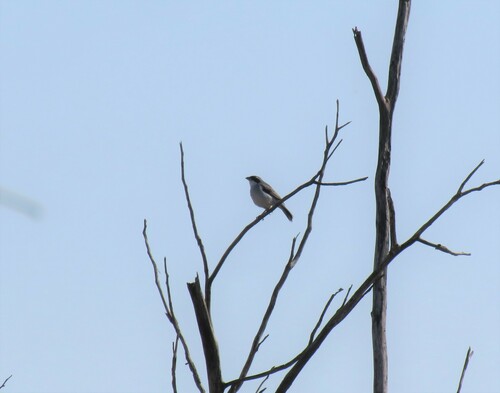 Tangara unifascié
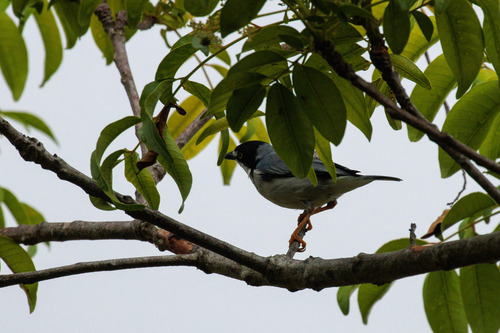 Tangara coiffe-noire
En bref
La Tangara unifascié et la Tangara coiffe-noire peuvent être distinguées principalement par leur plumage. La Tangara unifascié présente une ligne blanche distinctive sur ses ailes et un masque noirâtre autour des yeux, tandis que la Tangara coiffe-noire a une apparence capuchonnée plus uniforme. Les deux espèces habitent l'Amérique du Sud, mais leurs aires et habitats spécifiques diffèrent.
Conseils d’identification
Recherchez la ligne blanche sur les ailes et le masque noirâtre autour des yeux de la Tangara unifascié. Considérez l'habitat : si vous êtes dans le biome du cerrado de l'Amérique du Sud centrale, il est plus probable que ce soit une Tangara unifascié.
Plumage
La Tangara unifascié est principalement grise avec des ailes noirâtres présentant une ligne blanche sur les petites couvertures et un masque noirâtre autour des yeux. En revanche, la Tangara coiffe-noire a une apparence capuchonnée plus uniforme sans la ligne blanche distincte sur les ailes ni le masque autour des yeux.
Habitat
La Tangara unifascié est endémique du biome du cerrado de l'Amérique du Sud centrale, principalement dans les cerrados boisés du Brésil central et des régions voisines. Les préférences d'habitat de la Tangara coiffe-noire ne sont pas détaillées ici, mais elles diffèrent de la spécialisation du cerrado de la Tangara unifascié.
Tangara unifascié · Tangara coiffe-noire · Mes oiseaux difficiles