Birdr

White-banded Tanager vs Hooded Tanager

Neothraupis fasciata versus Nemosia pileata

Play a quiz with White-banded Tanager and Hooded Tanager
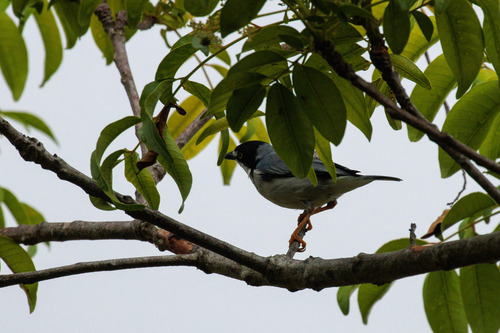
White-banded Tanager (Neothraupis fasciata) White-banded Tanager
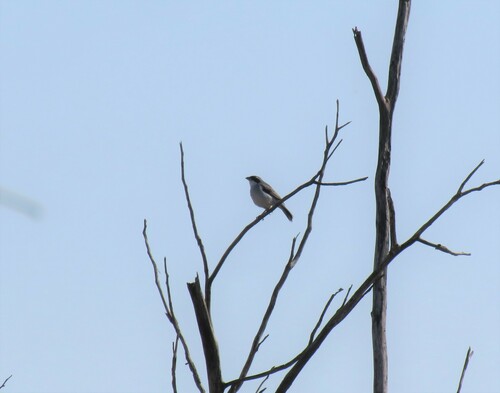
Hooded Tanager (Nemosia pileata) Hooded Tanager

Media

Loading…

In short

The White-banded Tanager and Hooded Tanager can be distinguished by their distinct head patterns and habitat preferences. The White-banded Tanager has a blackish mask and white postocular stripe, while the Hooded Tanager features a black hood. Both species are tanagers but occupy different regions and habitats.

Identification tips

  1. Look for the blackish mask and white postocular stripe on the White-banded Tanager. 2. Note the black hood on the Hooded Tanager. 3. Consider habitat: cerrado for White-banded, more varied for Hooded. 4. Observe behavior: cooperative breeding in White-banded Tanager.

Size

Both species are similar in size, typical of small to medium-sized tanagers.

Plumage

The White-banded Tanager is primarily gray with a blackish mask through the eyes and a white postocular stripe. In contrast, the Hooded Tanager has a distinctive black hood and a white belly, making the head pattern the most reliable distinguishing feature.

Behaviour

White-banded Tanagers exhibit cooperative breeding, with offspring helping at the nest. Hooded Tanagers do not display this behavior.

Habitat

White-banded Tanagers are found in the cerrado biome of central South America, preferring wooded savannas. Hooded Tanagers inhabit a broader range, including forest edges and open woodlands.

Voice

Specific vocalization details are not provided, but tanagers often have varied calls. Listening for differences in song may aid identification if observed.

Submit a better description

Use the same sections as the comparison. Your text is published immediately.

The White-banded Tanager and Hooded Tanager can be distinguished by their distinct head patterns and habitat preferences. The White-banded Tanager has a blackish mask and white postocular stripe, while the Hooded Tanager features a black hood. Both species are tanagers but occupy different regions and habitats.

  1. Look for the blackish mask and white postocular stripe on the White-banded Tanager. 2. Note the black hood on the Hooded Tanager. 3. Consider habitat: cerrado for White-banded, more varied for Hooded. 4. Observe behavior: cooperative breeding in White-banded Tanager.

Both species are similar in size, typical of small to medium-sized tanagers.

The White-banded Tanager is primarily gray with a blackish mask through the eyes and a white postocular stripe. In contrast, the Hooded Tanager has a distinctive black hood and a white belly, making the head pattern the most reliable distinguishing feature.

White-banded Tanagers exhibit cooperative breeding, with offspring helping at the nest. Hooded Tanagers do not display this behavior.

White-banded Tanagers are found in the cerrado biome of central South America, preferring wooded savannas. Hooded Tanagers inhabit a broader range, including forest edges and open woodlands.

Specific vocalization details are not provided, but tanagers often have varied calls. Listening for differences in song may aid identification if observed.

Discard your changes?

You have unsaved edits. If you leave now, those changes will be lost.

White-banded Tanager · Hooded Tanager · My Tricky Birds