
Anhinga vs Double-crested Cormorant
Anhinga anhinga contro Nannopterum auritum
Fai un quiz con Anhinga e Double-crested Cormorant
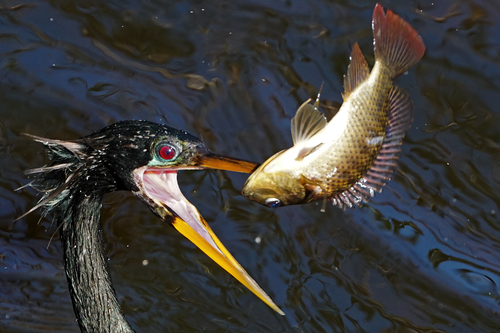 Anhinga
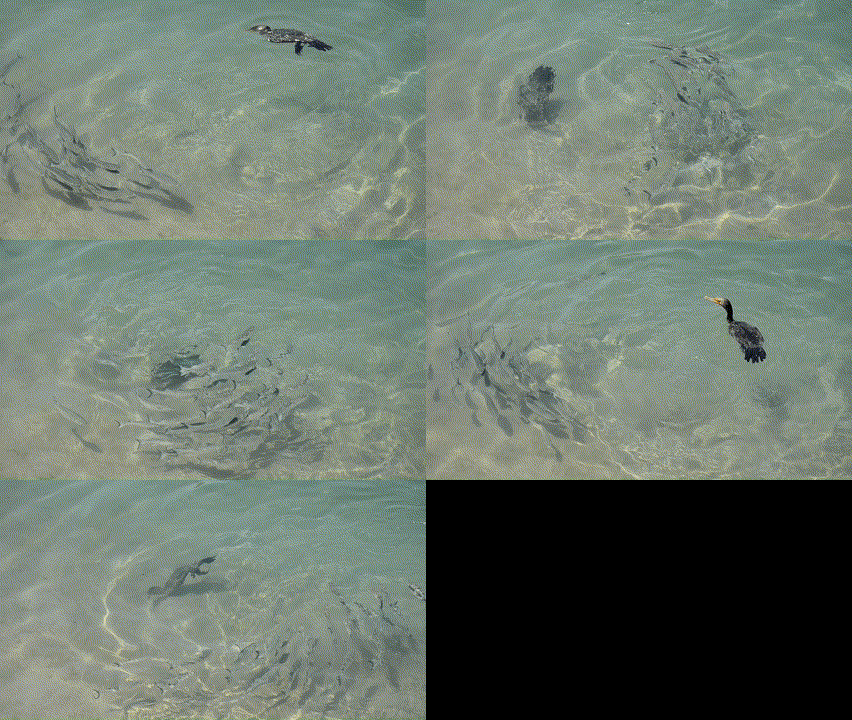 Double-crested Cormorant
In breve
L'Anhinga e il Cormorano dal doppio ciuffo possono essere distinti dalla loro postura del collo e di nuoto. Gli Anhinga hanno un collo lungo e snodato che spesso appare simile a quello di un serpente quando nuotano, con solo il collo e la testa visibili sopra l'acqua. Al contrario, i Cormorani dal doppio ciuffo nuotano tipicamente con una maggiore parte del loro corpo sopra la superficie dell'acqua.
Consigli di identificazione
Cerca il lungo collo simile a un serpente dell'Anhinga quando nuota, poiché questa è una differenza chiave. Osserva la postura di nuoto: gli Anhinga nuotano con i corpi sommersi, mentre i Cormorani dal doppio ciuffo hanno una maggiore parte del loro corpo sopra l'acqua. Durante la stagione della riproduzione, controlla i distintivi ciuffi del Cormorano dal doppio ciuffo.
Piumaggio
Gli Anhinga hanno un aspetto più snodato ed allungato con un collo lungo, mentre i Cormorani dal doppio ciuffo hanno una corporatura più robusta. Gli Anhinga appaiono spesso più scuri e più uniformi nel colore, mentre i Cormorani dal doppio ciuffo possono mostrare un piumaggio più variegato con un distintivo doppio ciuffo durante la stagione della riproduzione.
Comportamento
Gli Anhinga sono noti per il loro stile di nuoto unico, spesso con il corpo sommerso e solo il collo sopra l'acqua, guadagnandosi il soprannome di 'uccello serpente.' I Cormorani dal doppio ciuffo nuotano con una maggiore parte del loro corpo sopra l'acqua e sono meno propensi a mostrare questo comportamento.
Anhinga · Double-crested Cormorant · I miei uccelli difficili